The Drift and the Duty
By Rasheed Rabbi
May/Jun 26
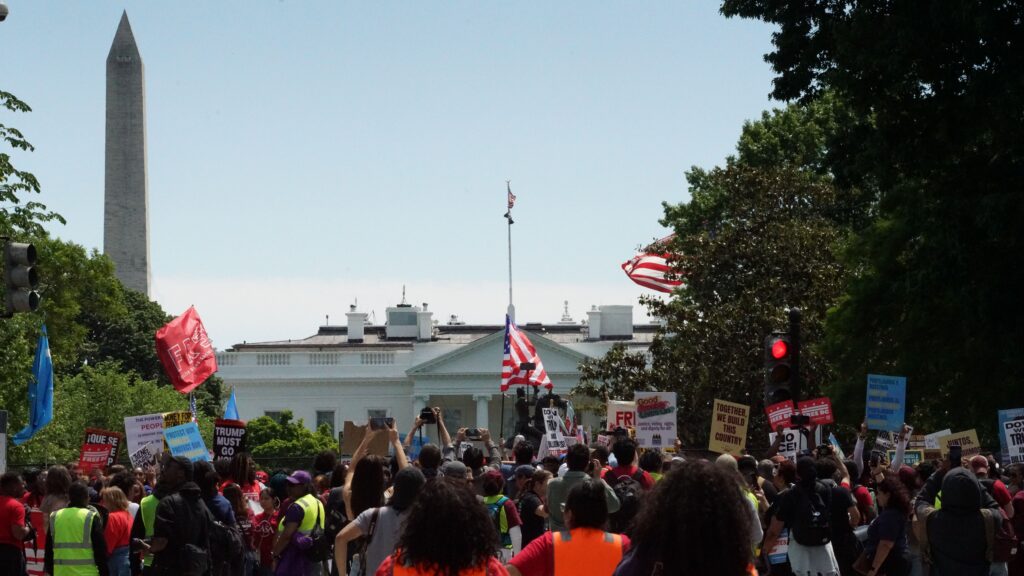
For over six decades, a single tradition has carried the weight of a community’s hopes, questions, and collective resolve: the Islamic Society of North America (ISNA) Annual Convention. This signature event of the ISNA calendar year unites thousands of souls, hundreds of the world’s most esteemed scholars, and a global network of organizations. It serves as a strategic point for ISNA to align its vision and priorities for the coming year among its leadership, members, partners, supporters, and the broader Muslim American community. And it all ignites from a single spark – a theme that sets the gathering’s coherence and a direction.
This year’s theme is “Persevere, Interconnect, Be God Conscious, Strengthen Each Other for True Prosperity.” It is not a slogan or a symbol, but a strategic expression of ISNA’s mission. This theme frames the moment we are living in as Muslim Americans, highlights the challenges before us, and elevates the values that must guide our collective work. To undertake this analysis with depth and integrity, the Convention Program Committee (CPC), a dedicated group of roughly 10 members — remains engaged all year long.
The CPC does not chase headlines or react to political noise. It examines the national landscape, the global pressures shaping Muslim life, and the ethical responsibilities rooted in Islam. Through this disciplined approach, the theme-setting process moves through three steps:
- Analyzing the American moment — grounding the theme in the lived realities and sociopolitical context of the U.S.
- Framing within Islamic ethical lens — evaluating those realities through the principles of the Quran and Sunnah to ensure moral clarity.
- Refining a resonating theme — distilling the analysis into a concise expression to guide the convention’s conversations, speakers, and community energy.
This year, the process extended beyond internal deliberation. Nearly 40 respected leaders were invited to share concerns, insights, and recommendations to broaden the circle of ownership long before the convention begins. To widen that circle even further, we trace how the theme emerged, why it matters, and how it becomes a compass for the Muslim community to seek clarity, purpose, and strength.
Step 1: Analyzing the American Moment
The year 2026 marks the 250th anniversary of the Declaration of Independence — a milestone meant to honor a nation founded in the principles of freedom, justice, and democracy. Yet the country approaches this moment not in celebration but in chaos and turmoil. The recent upheavals, at home and abroad, have stripped the anniversary of triumph and replaced it with a stark question: how far have these ideals drifted from their promise?
That drift becomes undeniably systematic when viewed through two interconnected lenses: domestic turmoil and international fracture.
- Domestic Turmoil
The most unnerving shock to the American public has been the release of the Epstein Files, which scathe political elites, corporate giants, and Hollywood icons by exposing their dark, hedonic, satanic proclivities in full view. Reports of citizens killed, legal residents harassed, and due process eliminated have deepened fears that foundational rights are collapsing. The “shameless” (Democratic Erosion Consortium, Dec 1 2025) refusal of leaders to accept basic accountability has only intensified the sense of moral decay pervading the country.
The legal system, meanwhile, has become a scapegoat. A series of emergency orders bypassed full briefing or oral argument through its so-called “shadow docket” and handed in repeated victories to the Trump administration. These rulings carried sweeping consequences: maintaining tariffs, enabling immigration raids built on racial profiling, and reshaping policy without public scrutiny. Political pressure has strained democratic institutions to their limits and heightened concerns about the judicial process being weaponized not only to secure policy wins but to target political opponents.
Unresolved crises from 2025 now define the volatile terrain of 2026. Courts are weighing explosive legal battles: transgender athletes in sports, the constitutional status of birthright citizenship, and allegations that Louisiana’s redistricting efforts disenfranchised voters are all expected to reach critical decisions. Each ruling carries the potential to ignite new political and cultural battles. Layered onto this are looming midterm elections, economic decline, and accelerating climate instability — forces converging to create a national atmosphere thick with uncertainty, tension, and fracture.
- Volatile Global Posture
International posture equally mirrors America’s domestic disarray. The year opened with a geopolitical shock as the U.S. carried out strikes inside Venezuela and kidnapped its president on Jan. 3. Such “reckless, chaotic, self-serving, and unconstitutional” move, as described by the Daily Post, continued as the administration threatened to coerce Greenland into becoming a U.S. territory and culminated in the indiscriminate bombing of Iran on Feb. 28 even as every major ally criticized and distanced itself from the U.S.
This was not an aberration but part of a consistent pattern of rigid alignment with Israel driven by deep institutional (The American Israel Public Affairs Committee [AIPAC]) influence, according to Politico. Trump publicly echoed the Israeli government’s narrative on Gaza, asserting — incorrectly — that Israel had fully complied with a ceasefire and placing sole blame on Hamas. The stance drew backlash even from parts of his own political base who accused the administration of distorting events and displaying troubling complacency in foreign affairs.
- A Nation at an Inflection Point
Taken together, these domestic and global ruptures reveal a country standing at an inflection point. The U.S. experienced its most intense partisan division in decades as the nation stands more fractured than at any point since the Civil War. The longest government shutdown in U.S. history only underscored the paralysis. Hostility toward the opposing party has hardened into a strange zero-sum mindset in which any gain for one side is seen as a loss for the country.
Polarization in 2026 is no longer a simple disagreement. It is identity driven, emotionally charged, fueled by fragmented media ecosystems, intensified by high-stakes political battles, and rooted in fears about democracy, rights, and national identity. In this climate, compromise feels like betrayal, and many believe the opposing side poses a genuine threat to the nation’s future.
Such polarization cuts across every line — political, racial, religious, and cultural. Some Americans increasingly view those with differing beliefs not as fellow citizens with competing ideas, but as threats to the nation’s future. Trust in neighbors and institutions has eroded. Civil dialogue has evaporated . The shared sense of national identity that once defined American democracy has diminished.
The irony is sharpest in the technology sector. Breakthroughs in artificial intelligence and the global reach of social media have not slowed the fracture. Instead, they have amplified outrage and misinformation while rewarding tribal loyalty over mutual understanding, casting a growing shadow of oligarchy.
Step 2: Framing within Islamic Ethical Lens
Political turmoil, institutional erosion, global volatility, and deepening moral fracture create not only a civic crisis but a profound moral test. Awareness alone is insufficient. Outrage destabilizes us. Despair defeats our resolve. If we lose our ethical compass while criticizing society’s moral decline, we risk mirroring the very decay we condemn. Hence, silence in such contested times is not neutrality, it’s an ethical failure.
ISNA’s CPC therefore seeks to extract meaning from chaos and distill it into a direction the community can trust. It views America’s moral crisis not as an opportunity for triumphalism. We are tasked with neither saving America nor judging it from afar, but with demonstrating perseverance in upholding a roadmap grounded in faith and responsibility.
Muslims in the U.S. — like many minority communities — have long navigated this turbulence. Our experiences reveal how ordinary people endure extraordinary times, and how communities adapt when the nation they call home enters profound uncertainty. These experiences answer urgent questions. How do Muslims preserve ethical integrity under pressure? How do we model justice without power? How do we speak when silence is rewarded?
The crux of these answers lies in confronting the tension: seeing the world clearly without surrendering to despair; acknowledging brokenness while believing in repair; facing darkness while protecting the capacity for light. The choice is not optimism versus pessimism; it is responsibility versus withdrawal.
Responsibility demands action, which may take many forms: advocacy, art, solidarity, repair, truth-telling, or creating spaces for others. The ISNA Convention is designed to articulate these responsibilities so Muslims may safeguard our rights amid deepening political divides and resist panic and cynicism in the face of renewed public anger over elite impunity. To bridge awareness and transformation, ISNA embraces the verse, “O believers! Patiently endure, persevere, stand on guard, and be mindful of Allah, so you may be successful” (Quran 3:200).
This verse calls us to move forward with constancy, to strengthen one another, and to remain conscious of God so that we may achieve collective prosperity. It highlights four key principles:
- Sabr — perseverance, constancy, self-restraint.
- Rabita — coming together to strengthen one another.
- Taqwa — an ever-present consciousness of God.
- Falah — success, well-being, and flourishing.
Putting these principles to work is not an individual task but a communal responsibility. Each of us must step forward to strengthen bonds, build trust, and support one another as bipartisan politics try to divide us, both domestically and globally.
Step 3: Refining a Resonating Theme
At this intersection of reality and responsibility — where crisis must be translated into clarity, fracture into focus, and uncertainty into a shared path forward — the theme “Persevere, Interconnect, Be God‑Conscious, Strengthen One Another for True Prosperity” emerged.
It is a duty call to resist the drift and anchor the convention. It is the lens through which every session is shaped. It is the direction we carry into the year ahead. Join us in claiming your participation.
Dr. Rasheed Rabbi, an Islamic Horizons board member, is the founder of e-Dawah and secretary of the Association of Muslim Scientists, Engineers and Technology Professionals. He serves as a khateeb at the ADAMS Center and is a certified Muslim chaplain at iNova Fairfax, iNova Loudoun, and Virginia’s Alexandria and Loudoun Adult Detention Centers.
Want more like this? Subscribe to the Islamic Horizons magazine and support authentic journalism by Muslims for Muslims.