And the Problem of Modern Weapons in Islam
By Nawal Ali
May/Jun 26
More than a thousand years before the Geneva Convention, Islam had already articulated rules of war. Prophet Muhammad (salla Allahu ‘alyhi wa sallam) issued instructions that read like a modern humanitarian law treaty. Do not kill women or children. Do not kill the elderly. Do not cut down fruit-bearing trees. Do not destroy crops or burn houses. Do not harm monks or those who have not raised arms against you.
This ethical foundation for the rules of war appears in the Quran: “Fight those who fight you, and do not go beyond that, because God does not love those who transgress” (2:190). From this single verse, scholars across the four Sunni legal schools built a detailed body of military law over several centuries. The core conclusion from these legal codes was highly consistent: civilians cannot be deliberately targeted.
Protection of civilians extended further than many realize. Eighth century jurist Al-Awza’i argued that destroying land without military purpose constituted fasad fi al-ard, corruption of the earth, and therefore is forbidden. Khalil al-Maliki’s book on Jihad prohibited weapons that cause unnecessary suffering such as napalm or rubber bullets. Farmers, traders, craftsmen, the sick, the blind, and the mentally ill were all protected according to classical scholarship. The underlying principle was always the same: if you are not actively fighting, you are not a legitimate target.
Then Came the Missile
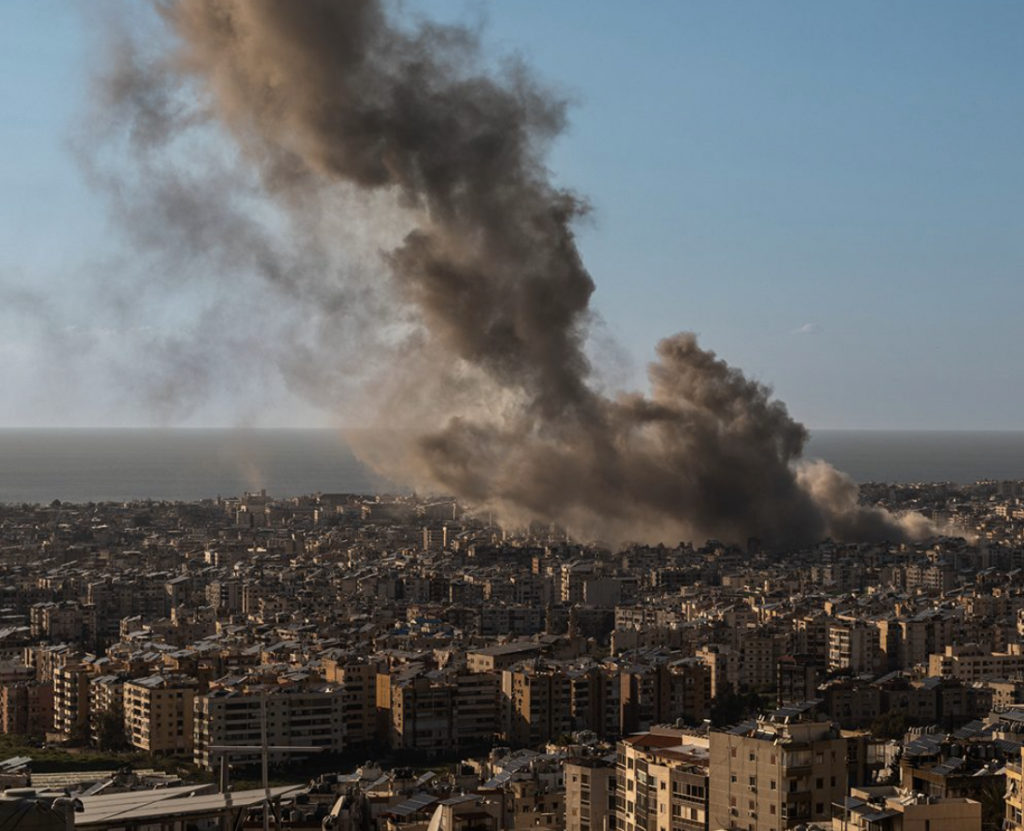
The classical rules assumed something that no longer exists. They assumed one could see who one was fighting – that the fighter confronted the enemy, distinction was visible, and refusal was possible. Modern warfare complicates this framework because the scale of destruction has changed dramatically. Previous weapons were limited by distance, visibility, and physical presence. A sword or spear could only reach the person standing in front of the fighter. Weaponry up until the early 1900s required a visible target. Today’s soldiers operate drones from control rooms thousands of miles from the people they are targeting. Cluster bombs scatter across hundreds of feet of ground. A grenade thrown into an urban area does not stop at apartment doors.
This is not merely a technical footnote. It sits at the center of whether Islamic war ethics can function in modern warfare at all. This raises a profound question. If a weapon cannot discriminate between soldiers and civilians, can it ever be used in a way that satisfies the ethical requirements set by Islam?
With a Grain of Salt
Although the question is challenging, Muslims as a community are forced to answer it at the risk of their own extinction. As it would not make sense to use premodern weaponry in our time with technologically advanced retaliation from the enemy, Islamic scholars have developed the principle of double effect to handle situations where civilian harm occurs alongside a legitimate military strike.
Double effect refers to the idea that one action causes two results: one good and the other bad. For example, in a military strike that kills the enemy but also harms nearby civilians, the harm has to be unintended, the target genuinely military, the civilian cost proportionate. For precision strikes that go slightly wrong, the principle holds. The doctrine of double effect accounts for regrettable accidents but it says nothing useful about weapons that make no attempt at distinction to begin with.
Nobody has worked this out cleanly. Not secular international law nor Islamic jurisprudence. The classical texts set a standard that modern weaponry structurally cannot meet, and most contemporary Muslim scholars acknowledge this tension. On the other hand, war is a reality of life and it will continue without us.
But there are options that allow for a more ethical battlefield. For example, international law dictates a ban on nuclear weapons. It also restricts the mistreatment of prisoners of war. International courts can pass judgment on the use of chemical weapons or methods of abuse such as starvation. Although not perfect, this judgment can lead to sanctions that may force the other side to reconsider their tactics. Yet it still does not reduce general civilian harm. So how does one fight an ethical war?
Iran in 2024
On April 13, 2024, twelve days after Israel bombed the Iranian consulate in Damascus and killed two Islamic Revolutionary Guard Corps generals, Iran launched more than 300 drones and missiles toward Israel. The targets were Nevatim and Ramon, two Israeli Air Force bases in the Negev desert. Before the launch, multiple countries had closed their airspace. They knew what was coming.
The 300 strikes resulted in an extremely low casualty count: one child. Analysts who covered the operation noted it was designed to show capability, not to kill. The targets were exclusively military and were even named ahead of time. Civilians were warned, and the casualty numbers reflect it.
Does this hold up against the classical Islamic framework? Largely, yes. The targets were military. Civilians were not the intended targets. The warnings reduced as much harm as possible. But ballistic missiles are not precision tools, which poses an ethical problem. Still, when compared to most military operations of the last few decades, the April 13 strike is about as close to the Islamic tradition of mitigation of civilian harm as anything one will find.
Iran took the same approach in the retaliatory strikes that followed in 2026, hitting U.S. bases in Iraq, UAE, Bahrain, and Qatar rather than targeting civilians. Iran then closed the Strait of Hormuz and fought against the enemy through economic means. The message was clear and the harm was directed towards those who Iran deemed deserving of it. No one else needed to be involved.
The Question Nobody Wants to Answer
In the case of places like Israel, the situation gets more convoluted . There, a whole nation advocated for the genocide of another. The classical sources do not give a comfortable answer here. The prohibition on targeting civilians does not lift when the enemy targets yours. There is no retaliation clause in the Quranic tradition against transgression.
Some scholars have tried to find one. There is a minority position built around mu’amala bil-mithl, reciprocal treatment, which was stretched to argue that civilian targeting could be justified as a response in kind. Mainstream Muslims rejected it. The civilians on the other side did not kill your people. Holding them responsible for what their government did is exactly the kind of collective punishment the classical prohibitions were built to prevent.
The genuine exception is darura, necessity. It permits otherwise forbidden acts when a community faces actual existential destruction and has exhausted every other option. Scholars kept the definition narrow on purpose. They knew what would happen if they did not; every army in a difficult war would find a way to qualify. Being outgunned does not meet the bar. Military disadvantage does not meet the bar. Genuine existential threat does, but only alongside exhausted alternatives and proportionality even within this singular exception.
Islamic tradition requires using whatever precision is available – serious assessment of who is present before a strike, avoiding area weapons near civilians, and issuing warnings when possible. The standard was never perfection. But it was, at least, an honest effort to mitigate harm.
The Prophet gave his army these instructions not because war in his time was clean. Armies then and now have found reasons to burn crops and kill civilians when things became militarily difficult. He gave these instructions because, in Islam, Muslims believe in self-defense without causing undue harm through which a society cannot recover. No matter how destructive one society or government may be, for Muslims, it does not allow the right for us to destroy the future of the next one. The rule of law must always be used to stop people from indulging in their worst impulses while also clarifying what is morally unacceptable. Over many centuries of human warfare from the time of the Prophet until now, those basic facts remain unchanged.
Nawal Ali is a public health graduate from Chicago with a background in development. She is currently researching Islamic culture in Central Asia.
Want more like this? Subscribe to the Islamic Horizons magazine and support authentic journalism by Muslims for Muslims.