Drawing the Line
By Faisal Kutty
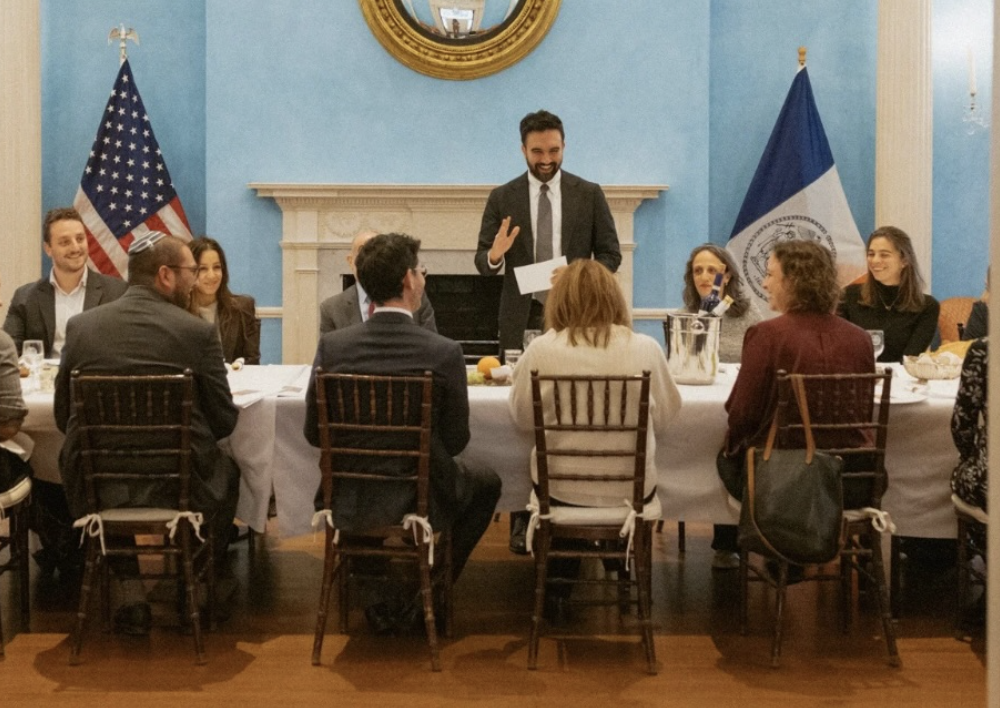
During his first day in office, New York City Mayor Zohran Mamdani drew a clear moral and political line between fighting antisemitism and silencing criticism of Israel.
Mamdani revoked earlier executive orders from the mayor’s office that had banned divestment from Israel and embedded the highly controversial International Holocaust Remembrance Alliance (IHRA) definition of antisemitism into city governance — measures that had been used to silence speech, activism, and advocacy on behalf of Palestine. At the same time, he left intact the city’s Office to Combat Antisemitism, making clear that protecting Jewish New Yorkers was not only a priority, but a responsibility.
“This is an issue we take very seriously,” Mamdani said during his first press conference after inauguration, reaffirming the city’s commitment to Jewish New Yorkers, “not only to protect them, but to celebrate and cherish them.”
That distinction matters deeply to Muslims and Palestinians in the United States who have experienced how accusations of antisemitism are weaponized to silence their voices. Too often, opposition to Israeli government policies, advocacy for Palestinian rights, or calls for divestment are treated not as political speech, but as moral offenses. Mamdani’s actions reject that framing outright.
For years, the IHRA “working definition” of antisemitism has been promoted as a tool to protect Jewish communities. In practice, however, it has frequently been used to suppress lawful speech about Palestine. Although the definition is explicitly nonbinding, its examples — many of which focus on Israel — have encouraged officials, administrators, and institutions to treat criticism of Israel as inherently antisemitic. The result has been investigations of university students, the censuring of faculty, the cancellation of events, and the inevitable exclusion of Palestinian narratives from public life.
This has had a particularly chilling effect on Muslims and Palestinians who find their lived experiences questioned, their political advocacy scrutinized, and their moral claims dismissed as hateful. It has also harmed anti-Zionist Jews who are targeted for refusing to equate their faith or identity with the policies of a foreign state.
Mamdani’s decision shows that this harm is not inevitable. By removing IHRA-based speech restrictions while maintaining structures to address real antisemitism, New York City affirmed a simple truth: combating hatred does not require suppressing dissent. Protecting one community should never come at the expense of another’s basic rights.
This approach is not only principled; it is supported by serious scholarship. A recent report from Rutgers Law School documented how the IHRA framework has been used across the United States to undermine free expression and legitimize anti-Palestinian racism. The report shows how speech about Palestinian dispossession, Israeli state violence, or unequal legal structures is routinely reframed as antisemitic — regardless of intent or evidence.
The Rutgers scholars are clear: antisemitism is real and dangerous, but it is best addressed through existing civil rights laws that focus on discriminatory conduct and genuine threats. When governments and institutions instead police political viewpoints, they violate constitutional principles and erode trust in anti-racism efforts.
This new report builds on an earlier Rutgers study titled “Presumptively Antisemitic: Islamophobic Tropes in the Palestine-Israel Discourse” that examined how universities, especially since Oct. 2023, have used antisemitism claims to justify extraordinary restrictions on speech related to Palestine. That earlier report warned that importing politicized definitions into civil rights enforcement would disproportionately harm Muslims and Palestinians while setting dangerous precedents for censorship. The latest report deepens that warning, grounding it firmly in constitutional law and historical analysis.
For Muslims, these findings confirm what many have experienced firsthand: that calls for justice in Palestine are too often treated as threats rather than expressions of conscience. When our grief, anger, and demands for accountability are silenced under the guise of protecting others, the promise of equal citizenship rings hollow.
Mamdani’s actions offer a different vision. They show that leaders can protect Jewish communities without suppressing Muslim voices. They can fight antisemitism without enforcing a morally bankrupt foreign policy. And they can reject bad-faith smears while governing with moral clarity.
This is not about choosing sides between communities. It is about refusing a system that pits communities against one another while shielding power from accountability. When antisemitism is weaponized to silence Palestinians, everyone loses — Jews, Muslims, and all those who are engaged in the broader struggle for justice.
At a moment when Muslim advocacy is increasingly surveilled, disciplined, and marginalized, Mamdani’s example matters. It reminds us that principled leadership is possible, and that civil rights mean little if they apply only to some voices and not others.
The question now is whether other leaders will follow that example or continue to allow definitions meant to protect people to be used instead to silence them.
Faisal Kutty is a lawyer, law professor, and affiliate faculty member at the Rutgers University Center for Security, Race, and Rights. You can follow him on X @faisalkutty.
Want more like this? Subscribe to the Islamic Horizons magazine and support authentic journalism by Muslims for Muslims.