Reflections on Justin Mashouf’s Documentary About Faith, Prison, and Gaza
By Faisal Kutty
Sept/Oct 26
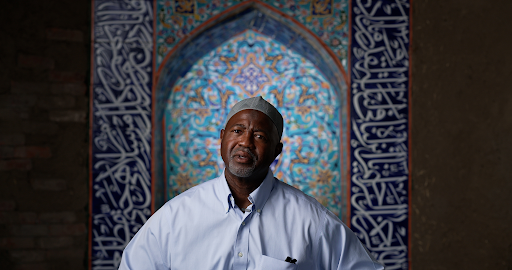
Some stories challenge our politics. Others challenge our assumptions. A rare few challenge our humanity. Filmmaker Justin Mashouf’s short documentary “$17.74” belongs to the latter category.
At first glance, the film tells a simple story. Hamzah Jihad Furqaani, an African American Muslim incarcerated in Folsom State Prison in Northern California for nearly four decades, earns 13 cents an hour for his work as a prison porter and janitor. After more than 136 hours of labor, he raised a mere $17.74.
During this time, Israel’s genocide in Gaza is unfolding. Disturbed by the suffering he sees, Furqaani donates his entire paycheck to relief efforts for Palestinians enduring bombardment, displacement, hunger, and loss. His donation inspires an outpouring of support from strangers around the world, generating more than $100,000 to help him prepare for his release and reentry into society after almost 40 years behind bars.
Yet to describe “$17.74” as merely a story about generosity would miss its deeper significance.
About the Filmmaker
Mashouf, a four-time Emmy Award-winning filmmaker, spent years documenting the lives of incarcerated Muslims and those attempting to rebuild their lives after imprisonment. More than 15 years ago, while researching what became his documentary, “The Honest Struggle,” he encountered Furqaani through correspondence with Muslim prisoners. Although Furqaani never appeared in that film, the two remained in contact over the years. Their relationship forms the foundation of “$17.74” and gives the documentary an intimacy and authenticity that would otherwise be impossible.
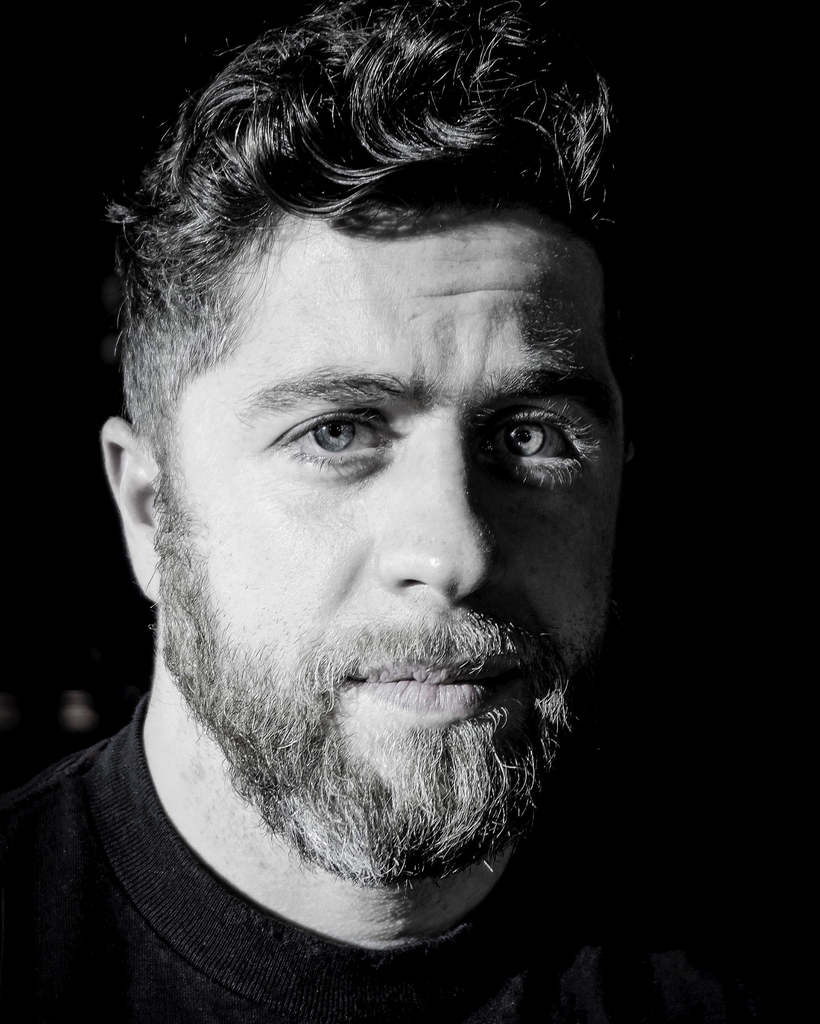
What emerges is not a portrait of a saint, nor an attempt to excuse past mistakes. Rather, Mashouf invites viewers to confront a question many prefer to avoid: what happens when we refuse to reduce a human being to the worst moment of his life?
Transformation Behind Bars
Furqaani’s story begins with tragedy. As a teenager, he was involved in a shooting that resulted in the death of his uncle, an event that altered the course of his life forever. Sentenced while still young, he spent decades navigating the harsh realities of incarceration.
During those years, however, another transformation occurred. Like countless incarcerated men before him, Furqaani encountered Islam. Inspired by The Autobiography of Malcolm X, he embraced the faith and found in it a framework for discipline, accountability, purpose, and hope.
This aspect of the story deserves particular attention within the Muslim community. Malcolm X’s legacy is often discussed in terms of civil rights, racial justice, and political awakening. Less frequently acknowledged is the profound impact his life continues to have on incarcerated individuals searching for meaning and redemption. American prisons have long been important sites of Islamic conversion and renewal, with thousands embracing the faith each year. For many, Islam is not an inherited identity but a conscious choice—a path toward reclaiming dignity in environments that often strip it away.
The documentary quietly captures this reality. Furqaani’s Islam is neither performative nor ideological. It manifests itself in a deeply personal sense of responsibility toward others. That responsibility finds expression when news of Gaza reaches him.
One of the film’s most powerful moments comes as Furqaani reflects on what he learned about conditions in Gaza. Reports of water being cut off, hospitals under siege, families displaced, and civilians killed left him unable to remain passive. Sitting in prison, possessing almost nothing, he nevertheless concluded that he had to do something. The simplicity of that decision is what makes it so powerful.
Many of us, blessed with freedom, education, financial resources, and public platforms, often convince ourselves that our individual contributions are too small to matter. Furqaani reached the opposite conclusion. He understood that moral responsibility is not measured by what we possess but by what we are willing to sacrifice.
In Islamic tradition, charity has never been evaluated solely by its monetary value. Prophet Muhammad (salla Allahu ‘alayhi wa sallam) taught that one should protect oneself from Hellfire even if only by giving half a date in charity (Ṣaḥīḥ al-Bukhārī 6540, Ṣaḥīḥ Muslim 1016). What matters is sincerity, sacrifice, and the recognition of another person’s humanity.
By that standard, Furqaani’s $17.74 is an extraordinary charitable act – one through which the prisoner becomes a leader.
Challenging Our Mindset
Society often imagines incarcerated people as burdens, cautionary tales, or statistics. Yet here is a man whom many would quickly dismiss as having little to offer demonstrating a level of moral clarity that often eludes those living comfortably beyond prison walls. While governments debated the efficacy of ceasefires and politicians cynically calculated electoral consequences, Furqaani acted.
The film also invites reflection on another uncomfortable reality. Furqaani’s modest paycheck was not merely a symbol of generosity; it was also a reminder of the often-overlooked realities of prison labor and mass incarceration in America. Without turning the documentary into a political manifesto, Mashouf subtly raises questions about punishment, rehabilitation, and the value society places on human life.
Perhaps that is why Gaza’s suffering resonated so deeply with Furqaani. Those who experienced exclusion often recognize it in others. Those who know what it means to be forgotten are frequently the first to notice those whom the world has abandoned. From a prison cell thousands of miles away, Furqaani saw not statistics nor headlines but human beings whose dignity was being denied. His response was not political calculation. It was empathy.
These themes should resonate strongly with Muslims. The Quran repeatedly reminds believers to stand firmly for justice and insists upon the inherent dignity of every human being (4:135). The Islamic tradition does not deny accountability for wrongdoing. It also refuses to deny the possibility of transformation.
While the experiences are obviously different, both issues of mass incarceration in America and the Gaza genocide raise difficult questions about human dignity, invisibility, and society’s obligations toward vulnerable populations. Both challenge us to see individuals rather than categories and to recognize humanity where others have learned not to look.
What makes “$17.74” especially compelling is that it never allows despair to have the final word.
When Mashouf shared Furqaani’s donation online, he could not have anticipated the response. Thousands were moved by Furqaani’s story. Yet even then, Furqaani’s focus remained elsewhere.
Rather than celebrating the funds raised on his behalf, he urged supporters to continue directing their attention toward those suffering in Gaza, Yemen, and parts of Africa. Having spent decades with almost nothing, he still worried more about others than himself.
A Priceless Lesson
At a time when public discourse is increasingly dominated by self-promotion, manufactured grievance, and political division, Furqaani offers a radically different model of human engagement. He reminds us that compassion is not dependent upon circumstance. Empathy is not reserved for the privileged. Moral leadership can emerge from the most unexpected places.
The genius of Mashouf’s film is that it recognizes this truth and allows it to unfold naturally. He does not preach. He does not manipulate. He simply introduces viewers to a man whose actions force us to reconsider what it means to live faithfully in a broken world.
As the film concludes and Furqaani prepares for life beyond prison walls, viewers are left with a question that extends far beyond one man’s story: what would we do if all we had was $17.74?
For Muslims, the question is even more direct. Would we still recognize our obligations to others? Would we still see Gaza’s children as our concern? Would we still believe that even the smallest act of compassion matters?
Furqaani answered those questions long ago.
A man confined to a prison cell looked across continents and saw the suffering of strangers as his own. In doing so, he embodied one of the Prophet’s most enduring teachings: believers are like a single body; when one part suffers, the whole body responds.
His gift to Gaza was worth $17.74.
Its lesson is priceless.
Faisal Kutty is a lawyer, law professor, and affiliate faculty member at the Rutgers University Center for Security, Race, and Rights. You can follow him on X @faisalkutty.
Want more like this? Subscribe to the Islamic Horizons magazine and support authentic journalism by Muslims for Muslims.