The Great American Spectacle
By Ammarah Ahmed
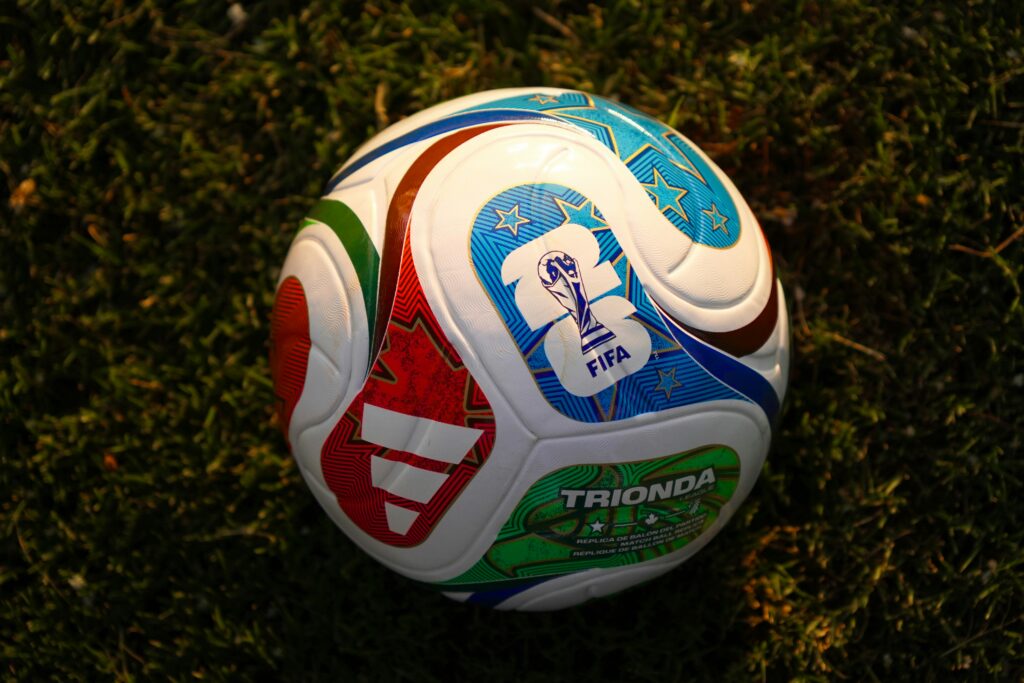
As the United States of America marks 250 years since its founding, the country is once again immersed in spectacle. Fireworks light the sky and flags of red, white, and blue wave from every corner. The 2026 World Cup adds to this sense of festivity. But once we step back from the pageantry, the concept of “bread and circuses” becomes easier to see: give people just enough resources to feel satisfied and just enough spectacle to keep them from looking at what lies beneath the surface.
In the U.S. today, the circuses are often sporting events wrapped up in the language and symbology of national pride, strength, and militarism. That language might project superior strength through competitive sports or conversely, the spirit of unity through tournaments like the World Cup or the Olympics. Beneath the pageantry though, these spectacles mask deep inequality and repression at home as well as a long record of violence and intervention abroad. As America prepares to celebrate its semiquincentennial, it is worth asking what this American spectacle is really asking us to see – and what it works so hard to keep out of view.
The 2026 World Cup is central to that question. With the U.S. co-hosting 78 out of 104 matches, this soccer tournament is being promoted as proof that the nation is open, diverse, and ready to welcome the world even as its migration policies, travel bans, and security practices send the opposite message. The tournament is not just a sports moment; it is one of the stages on which the country reveals itself.
Sportswashing and Power
Sportswashing uses sports to launder a compromised reputation. Governments and corporations host or sponsor major sporting events not only to entertain, but also to distract from corruption, repression, and/or other human rights abuses in order to present a benevolent image to the world. It is a form of duplicitous rebranding: invite the world to your stadiums, light up the skyline, and hope the spectacle outshines the scandals.
In recent years, the term has been used most often in relation to countries like Qatar, Saudi Arabia, or Russia, and to global events like the World Cup or the Olympics. These tournaments are billed as celebrations of athletes, sport, prosperity, and global unity, but they also serve as stages where nations compete for soft power, cultural influence, and legitimacy.
When Qatar hosted the 2022 World Cup, Western governments loudly condemned its human rights record, eager to cast doubt on the soft power ambitions of a Middle Eastern host. What is less often acknowledged is that the U.S. and other Western nations actively participate in this same obscurantist logic; in ways, they actually pioneered it. From ancient gladiator games to modern mega-events, sports have long been a way for empires, old and new, to polish their image while keeping state violence and domestic repression just out of frame.
Sportswashing has never been foreign to America. But the U.S., with its global cultural reach and heavily curated public image, represents the most polished iteration of this practice. From the Cold War to today, spectacle became a tool of ideological competition. During the 20th century, the two Cold War superpowers poured nearly endless resources into Olympic boycotts, propaganda broadcasts, and carefully-staged mega-events all designed to show that their system was more modern, more prosperous, and more humane than the political system enforced by their counterpart. Sports and mass media were not peripheral, but mobilized specifically to serve that image, helping turn political rivalry into public performance.
That same logic remains visible today. Americans continue to live with mass inequality and widening income gaps, persistent racial violence, and increasingly militarized borders and towns. At the same time, the U.S. is projecting itself as a guarantor of peace and security even as it wages an illegal and unwarranted war on Iran while directly supporting Israel’s genocide of Palestinians. Against that backdrop, the country is co-hosting the World Cup, inviting tourists from around the world and marketing an image of democracy, stability, and unity situated uneasily beside the brutal reality it works so hard to keep offstage.
So when the World Cup is used to beam out a carefully curated picture of the U.S., it does so while global surveys reveal collapsing trust in the nation. A 2026 survey conducted by Pew Research Center shows that out of 36 countries, 63% said that the U.S. does not contribute to peace and stability. 76% have no confidence in U.S. President Donald Trump, and 57% have an overall unfavorable opinion of the U.S.
The message behind these polls is clear: the U.S. is now seen as a destabilizing force, not as a guarantor of peace.
The 2026 World Cup
International tournaments are, in effect, carefully-staged performances for a global audience. Host countries are not simply chosen for their stadiums or logistics, but for the positive image they can project to the world. That is what makes these tournaments politically useful. They allow power to appear polished and inclusive even when the conditions surrounding it tell a more complicated story. In that sense, spectacle does not replace politics, it becomes a medium for it.
The World Cup gives the U.S. another chance to present itself in a more favorable light. It will be sold as proof that America is open, diverse, modern, and welcoming – in stark contrast to the conditions on the ground.
Trump’s travel ban, which overwhelmingly targets Muslim-majority countries, sits at the center of this contradiction. Over 120 civil liberties organizations issued a joint travel advisory warning that World Cup visitors could face serious violations. They pointed to the risk of invasive screening, arbitrary denial of entry, detention, deportation, and heightened immigration enforcement.
And the tournament has already exposed the distance between America’s self-image and its actual policies. The 2026 World Cup saw a record high number of 14 Muslim-majority countries competing in the tournament. But from the outset, Muslim athletes, teams, and fans have faced travel restrictions, visa barriers, and unwarranted political suspicion.
Notably, referee Omar Artan – the first Somali official to take part in the World Cup – was subjected to an 11-hour interview by US border officials and was ultimately denied entry into the U.S. due to “vetting concerns.” Additionally, Iranian players were permitted to enter the U.S. only on match day and were required to depart just after. Some team officials and support staff were denied visas altogether. The arrangement forced the team to base itself in Mexico and commute across the border for its games, causing the team an unfair logistical strain.
Mega-events like the World Cup reveal how states manage freedom of movement, making the event a site where border policy, projected state image, and international legitimacy converge. It depends on institutions to decide who is welcomed, what is policed, and which version of the country is allowed to appear on the world stage.
But the 2026 World Cup is only the latest example of a much older pattern. These nefarious practices have deep roots in the American project.
250 Years of Bread and Circuses
Since its violent founding, the U.S. has used mediated propaganda to shape how it is seen by the world. From the savage displacement of Indigenous peoples, to a brutal system of slavery, and from the Civil War to its myriad of wars of choice around the globe in the 21st century, the country has long tried to convert power into moral authority.
That pattern continued through the Cold War when military rivalry and political performance worked together to stage American strength, and then into wars across East Asia and the Middle East. The so-called War on Terror left devastation across an entire region, with staggering death and displacement, even as the U.S. continued to present itself as a global standard-bearer of morality and righteousness.
After more than 250 years of violence at home and abroad, the result is not the image of peace or legitimacy, but a world increasingly skeptical of American power. In that sense, the spectacle surrounding sporting events, parades, and other national pageants taking place this summer is far from reality itself; it is a performance meant to condition or erase the memory of continual violence, at home and abroad.
But the spectacle does not erase the gap between story and truth. That is what makes the 250th an important moment: the country is both celebrating itself and trying to control the story of what it has become. These efforts should leave us with a more honest reckoning with the gap between national myth and global reality, and with the question of why that gap is so often easiest to ignore when the spectacle is most powerful. It is up to us to recognize that spectacle is not reality, but performative politics.
Ammarah Ahmed is a Muslim American journalist covering law, politics, and economic empowerment. She also holds an LL.M. in International Law and Human Rights Law.