CAIR’s 2026 Civil Rights Report
By Corey Saylor
Jul/Aug 26
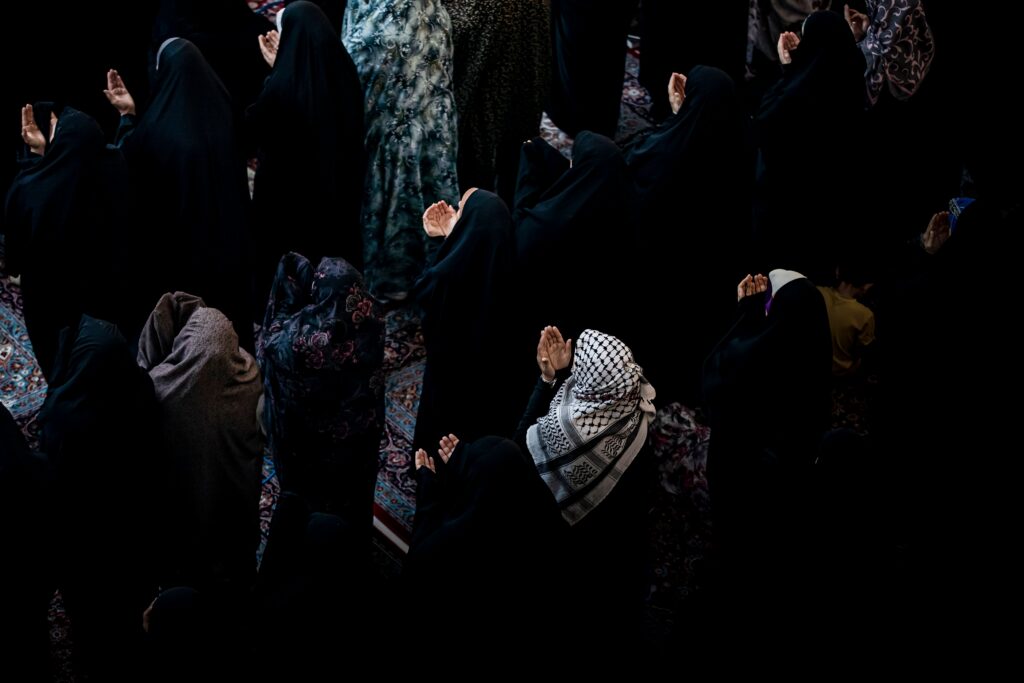
The Council on American-Islamic Relations’ (CAIR) 2026 status of Muslim civil rights report details how recent months saw powerful political leaders and institutions try to put conditions on freedom. You can be like them, speak their approved lines, worship their approved ways, and trace your ancestry to their approved places, or you do not belong.
The Department of Labor put the message bluntly in a Jan. 10 social media post: “One Homeland. One People. One Heritage. Remember who you are, American.”
The annual civil rights report, first issued in 1997, shows that Islamophobia in the United States remains at record highs. CAIR received 8,683 complaints nationwide in 2025 – the highest number of single-year complaints CAIR has recorded.
This summary presents some of the key attacks on civil rights as well as the rights to be different and to dissent documented in the report.
Florida, Illinois, Minnesota, Oklahoma, and Texas are national standouts in a record setting year. All five states have seen increasing complaints in each of the last three years.
CAIR-Minnesota reported a 96% increase in complaints in 2025 over the previous year. 23% of their year total was recorded in December, after President Trump disparaged Somali Americans and initiated Operation Metro Surge, subjecting Minnesotans of Somali descent to immigration enforcement action. Federal data shows that 58% of the estimated 107,000 people of Somali descent in Minnesota are American born. Of those Somalis who were born outside of the U.S., 87% are naturalized citizens.
Throughout Operation Metro Surge, many braved ICE’s cruelty and police-state style tactics to reassert American norms of due process and rule of law. It took the killings of two Americans to finally raise the pressure, but this public pushback resulted in the government ending Operation Metro Surge.
CAIR-Chicago, covering Illinois, reported a 65% increase in complaints over 2024.
Texas Gov. Abbott and other state officials used the power of their offices to frame Muslim life as uniquely suspicious and threatening. Their targets included an Islamic center, a proposed mosque-centered development, Muslim funeral practices, Islamic mediation services, Islamic schools, and CAIR itself.
Florida officials, including Gov. Ron DeSantis, also used state authority to cast Muslim advocacy and institutions as suspect. This included targeting CAIR, suggesting that Islamic schools may be categorically disqualified from otherwise available public funding, and advancing proposals framed as prohibitions on “sharia.”
In 2024 CAIR found that Muslims — along with Palestinians, Arabs, Jews, African Americans, Asian Americans and others — were targeted due to their antigenocide and anti-apartheid viewpoints and these viewpoints were central to driving anti-Muslim discrimination at the time. As a result, it became difficult to untangle when attacks relied on Islamophobic or anti-Palestinian racist stereotypes.
Anti-Muslim narratives more clearly resurfaced in 2025, particularly the notion that the religious principles followed by Muslims are inherently threatening and anti-American.
Five bills aimed either effectively banning Islam from the U.S. or banning Muslims from coming to the country were introduced in the U.S. Congress in 2025. These were supported by high-ranking federal officials who have among them claimed Islam is not a religion but a cult or political ideology
Rep. Brandon Gill (R-Tex.) called Islam, “a political ideology.” Alabama Senator Tommy Tuberville claimed, “Islam is not a religion. It is a cult.” Rep. Randy Fine (R-Fla.) called for the destruction of mainstream Muslims.
In December, Reps. Chip Roy (R-Tex.) and Keith Self (R-Tex.) founded the so-called “Sharia-Free America Caucus.” As of March 2026, they claimed almost 60 members. Member remarks make it clear that Islam is the target of the caucus’ work. Self believes, “While Western civilization has evolved, Islam has not. Islam is stuck in the eighth century, and if they succeed at imposing their beliefs upon us, we will be dragged back into the Dark Ages.” Roy thinks America is seeing “the Islamification of our country.”
Government officials used collective and ideological punishment to target both non-citizens and citizens who are perceived to be ethnically or ideologically undesirable.
Framing speech supporting Palestinian human rights as inherently threatening and biased, the Trump administration justified several visa revocations and high-profile arrests based on the targeted individual’s viewpoints.
Initial public claims of criminal or otherwise illegal behavior were largely unsupported by any evidence. Secretary of State Marco Rubio signed a two-page document that alleged no criminal conduct by Mahmoud Khalil but said he could be deported for his beliefs. The administration accused Rumeysa Ozturk of supporting terror but did not produce evidence supporting the allegation in court. Observers suggest that Ozturk was targeted for a 2024 opinion piece in a Tufts University student newspaper which challenged the university’s policies toward Israel.
Immigration officers detained British Muslim journalist and political commentator Sami Hamdi at San Francisco International Airport on the morning of Oct. 26, 2025. Hamdi had traveled to California on a valid visa for a series of public appearances in which he spoke about Palestinian human rights and the Israeli genocide in Gaza. After anti-Muslim, pro-Israel extremists began urging U.S. officials to revoke his visa and remove him from the country, the government secretly revoked his visa and then detained him.
The legal document initiating Hamdi’s removal case charged only a visa overstay — an overstay created by the government’s own secret revocation of Hamdi’s legitimately issued visa. After more than two weeks in ICE custody based on nothing more than the government-manufactured visa-overstay allegation, Hamdi left the U.S. voluntarily.
By Sept. 2025, a federal judge ruled in a case brought by the American Association of University Professors and the Middle East Studies Association that government officials “deliberately and with purposeful aforethought” coordinated two federal agencies to “intentionally to chill the rights to freedom of speech and peacefully to assemble” of the group’s members.
Officials applied collective suspicion to Afghans, Somalis, and Syrians rather than relying on individualized assessments. While many ethnicities were targeted in 2025, the singling out of Syrians, Afghans, and Somalis fits a long pattern in which Muslim communities are framed as uniquely suspect. Language describing countries as “hotbeds of terrorism,” rhetoric labeling Somalis as “garbage,” and the framing of Muslim-majority nations as inherent security risks reveal how cultural prejudice informed state action.
In two high profile cases, the American public chose to be represented in government by Muslims, rejecting the idea that being Muslim disqualifies a person from public service.
Voters in New York City selected Zohran Mamadani as their mayor. Mamdani won 50% of the vote in a three-way race, eight points ahead of his nearest competitor.
Voters in Virginia selected Ghazala Hashmi as their lieutenant governor. Hashmi won 56% of the vote, beating her competitor by 12 points.
Litigation proved relatively effective in asserting constitutional boundaries, with courts repeatedly rejecting censorship and viewpoint discrimination while protecting some rights to privacy — with the caveat that litigation is often reactive rather than preventive.
Palestine Legal and CAIR announced a settlement agreement for their client, University of Maryland Students for Justice in Palestine (UMD SJP), with the University of Maryland (UMD) after winning a court ruling against the school. UMD officials had likely engaged in a long U.S. tradition of justifying silencing disfavored speech – in this instance, anti-genocide voices-–by citing the potential for public disorder – in this instance, threats made by pro-Israel individuals. The $100,000 settlement was the largest ever secured for pro-Palestine student protesters.
CAIR-NY, CAIR National, and the law firm of Dratel & Lewis intervened on behalf of Mahmoud Khalil and other plaintiffs after a Congressional committee demanded that Columbia University turn over personal information that likely involved hundreds of students. Columbia has not furnished any records to the federal government since a Court order was issued in response to the lawsuit.
Columbia is, in fact, banned from providing any student records to the federal government without first notifying the Court.
By the end of 2025, the legal status of Muslim Americans remained formally unchanged, but the conditions under which rights could be exercised had narrowed.
A defining feature of 2025 was the increased use of discretionary authority — executive proclamations, emergency powers, immigration discretion, regulatory investigations, and funding conditions — by public officials to achieve outcomes that would likely fail in court.
Equal access to social opportunities — education, travel, civic participation, and nonprofit activity — was increasingly contingent on political alignment, silence, or litigation capacity. Equal protection depended less on neutral administration and more on after-the-fact judicial correction.
For Americans concerned with limited government, equal treatment under the law, and constitutional restraint, these developments raise broader questions. Systems that rely on suspicion, discretionary power, and after-the-fact correction do not remain confined to one community. The long-term health of American democracy depends on whether rules are applied evenly — and whether rights are protected before, not after, they are tested.
Corey Saylor is the research and advocacy director at CAIR, the nation’s largest Muslim civil rights organization.
Want more like this? Subscribe to the Islamic Horizons magazine and support authentic journalism by Muslims for Muslims.