Zakat and Conscience
By Faisal Kutty
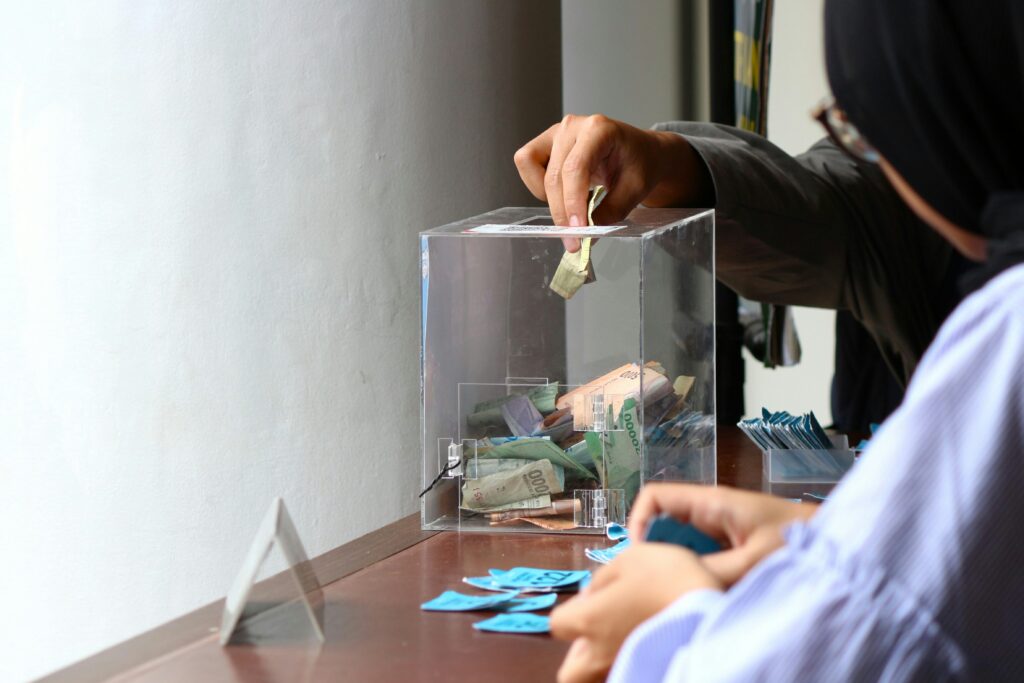
The growing debate within our community over whether zakat (obligatory charity) may be used to support political advocacy in response to the devastation in Gaza has revealed something deeper than a disagreement about Islamic jurisprudence. It has exposed profound anxieties about religious integrity, institutional trust, moral compromise, and the fear that what is sacred is slowly being absorbed into systems that do not honor it. These concerns are real and they deserve careful reflection rather than dismissal.
For generations, zakat has symbolized solidarity with the vulnerable and submission to divine command. It is not merely a financial obligation. It is worship, moral discipline, and social responsibility. When Muslims hear that zakat may, in limited circumstances, be directed toward legal or political advocacy, many instinctively worry that something essential is being diluted. In an era marked by institutional failures and political cynicism, such apprehension is understandable.
Critics of expanded zakat eligibility warn that it risks turning a sacred obligation into a flexible funding pool for institutions, professionals, and advocacy networks. They fear that resources meant for the poor may be diverted toward consultants, researchers, and political intermediaries. They point to the long record of broken promises by political leaders and ask why religious funds should enter a system that has repeatedly failed Palestinians and marginalized Muslims.
These concerns reflect an instinct to protect the sanctity of worship and the dignity of the poor. They are rooted in sincerity, not obstructionism. At the same time, they risk narrowing our moral imagination at precisely the moment when our tradition calls for thoughtful engagement.
The Requirements of Islamic Law
Islamic law was never developed in isolation from social realities. From its earliest centuries, fiqh emerged through engagement with famine, war, displacement, empire, and political instability. Scholars were constantly forced to ask how religious obligations should function under changing conditions. Zakat administration itself has taken many forms across Islamic history — sometimes centralized, sometimes decentralized, sometimes public, sometimes private. Adaptation has always been part of the tradition.
The real question before us is not whether adaptation is permissible. It always has been. The real question is whether adaptation is governed by ethical discipline, transparency, and accountability. When institutions fail to meet these standards, trust erodes. When donors feel that zakat circulates among insiders rather than reaching those in need, skepticism grows. That skepticism is justified. But it should lead us toward institutional reform and clearer guardrails, not toward disengagement.
An example of disciplined juristic reasoning in this area can be found in a Feb. 2026 fatwa (non-binding legal opinion) issued by Sheikh Ahmad Kutty, resident scholar at the Islamic Institute of Toronto, in response to a request from The Muslim Fund. Rather than treating zakat as a flexible or unrestricted resource, Kutty reaffirmed its moral hierarchy. “The foundational principle in the distribution of [zakat] is that its primary recipients are the poor and needy (al-fuqara’ wa-l-masakin), whose rights to sustenance, shelter, health care, education, and basic dignity must always be given precedence,” he wrote.
This is not a marginal observation. It is the foundation of the ruling. Any broader application of zakat is expressly subordinated to the rights of the vulnerable. Only after establishing this principle does he turn to the Quranic category of “fi sabil Allah” (“for the sake of God”), noting that it is expressed in general terms and that classical interpretations — often focused on armed defense — reflected historical circumstances rather than an exhaustive definition.
Kutty situated contemporary advocacy within this framework, observing that in contexts marked by Islamophobia, legal marginalization, and threats to Muslim civil rights, legitimate defense may include intellectual, legal, educational, and institutional efforts that preserve Islam, protect Muslim communities, and safeguard their dignity and lawful rights.
Crucially, this permissibility is tightly conditioned. He emphasized that such allocations must not undermine or displace the poor, that zakat must be administered through trustworthy, transparent, and accountable institutional structures, and that supported activities must not serve partisan, personal, or discretionary public interests.
This is not an endorsement of unrestricted political spending. It is a carefully-bounded recognition that, in certain circumstances, protecting the community may require more than direct cash assistance, while insisting that moral hierarchy, transparency, and restraint remain paramount.
The Source of Skepticism
Much of the discomfort surrounding political zakat stems from deep disillusionment with American politics. Many Muslims watched politicians accept donations, attend community events, and then vote in ways that betray every promise they made. They have seen Palestinian suffering dismissed, minimized, or rationalized despite years of civic engagement. It is easy, under these conditions, to conclude that political participation is futile and morally corrosive.
There is truth in this frustration. Money alone rarely determines political behavior, especially for marginalized communities. Power operates through media ecosystems, ideological alliances, corporate interests, and geopolitical priorities that often override moral appeals. Yet political systems, however flawed, remain central to shaping humanitarian outcomes. Decisions about weapons transfers, diplomatic protection, humanitarian access, refugee policy, and international accountability are political decisions. They are not made in charitable spaces alone.
To disengage from these processes because they are imperfect may feel principled. But it also means surrendering influence to those with fewer ethical constraints. Islamic ethics was never about retreating from flawed systems. It has been about engaging them with restraint, conscience, and accountability. From early Islamic governance to colonial and postcolonial contexts, scholars and community leaders have navigated unjust structures while trying, albeit imperfectly at times, to limit harm.
Some argue that politics contaminates worship, that involvement with electoral machinery undermines spiritual integrity. This concern resonates deeply. Modern politics often rewards cynicism and punishes moral courage. Many people of faith experience this as spiritually alienating. But our tradition never assumed that ethical life unfolds in pristine conditions. Much of Islamic jurisprudence was developed under unjust rulers and corrupt administrations. Scholars did not wait for ideal circumstances. They worked within constraints, striving to preserve moral boundaries.
Sometimes, living an ethical life involves choosing between imperfect options rather than pristine ones. The challenge is not to avoid moral risk entirely — that is impossible — but to manage it responsibly.
A Time of Moral Urgency
The devastation in Gaza intensified these debates because it confronts us with urgent moral questions. When entire populations are displaced and destroyed, people ask what meaningful solidarity looks like. Some respond through humanitarian relief. Others through legal advocacy. Others through political mobilization. Others through public education. These approaches are not competitors. They are complementary responsibilities.
Direct aid is indispensable. It saves lives. But financial relief alone cannot dismantle the structures that perpetuate violence. Structural injustice requires structural responses. At the same time, advocacy without compassion becomes hollow. Our moral tradition calls us to integrate both.
Legitimate concerns remain about the risk of zakat being captured by intermediaries or professionalized advocacy networks. Any system that privileges insiders over beneficiaries violates Islamic ethical principles. This danger must be confronted honestly. It demands strong governance: audits, public reporting, community oversight, conflict-of-interest rules, and financial transparency. These are not modern inventions foreign to Islam. They reflect classical commitments to amanah (trust), hisbah (accountability), and adalah (justice).
If zakat is extended beyond direct aid in limited circumstances, it must be subject to higher scrutiny, not lower. Sanctity requires discipline.
Ultimately, zakat is not merely a financial obligation. It is a moral covenant. It embodies Muslims’ commitment to human dignity, social solidarity, and divine accountability. Preserving its sanctity does not mean isolating it from the world. It means ensuring that when it engages the world, it does so with integrity, humility, and responsibility.
The Path Forward
We are living in an age of mass suffering, moral fragmentation, and institutional failure. In such a moment, neither naïve political optimism nor principled withdrawal is sufficient. We need institutions and jurisprudence capable of navigating injustice without surrendering principle. That requires honesty about our failures, commitment to reform, and willingness to engage complexity.
This path is more difficult than categorical rejection. It demands patience, vigilance, and moral courage. But it is the path our tradition has always chosen at its best. It is the path of responsible stewardship in a broken world.
Disclosure: The author is related to Shaykh Ahmad Kutty, whose fatwa is cited in this article. The views expressed here are the author’s own and are based on his independent professional and ethical analysis.
Faisal Kutty is a lawyer, law professor, and affiliate faculty member at the Rutgers University Center for Security, Race, and Rights. You can follow him on X @faisalkutty.
Want more like this? Subscribe to the Islamic Horizons magazine and support authentic journalism by Muslims for Muslims.