A Story of Fundraising, Education, Faith, and Sisterhood
By Tayyaba Syed
Sept/Oct 26
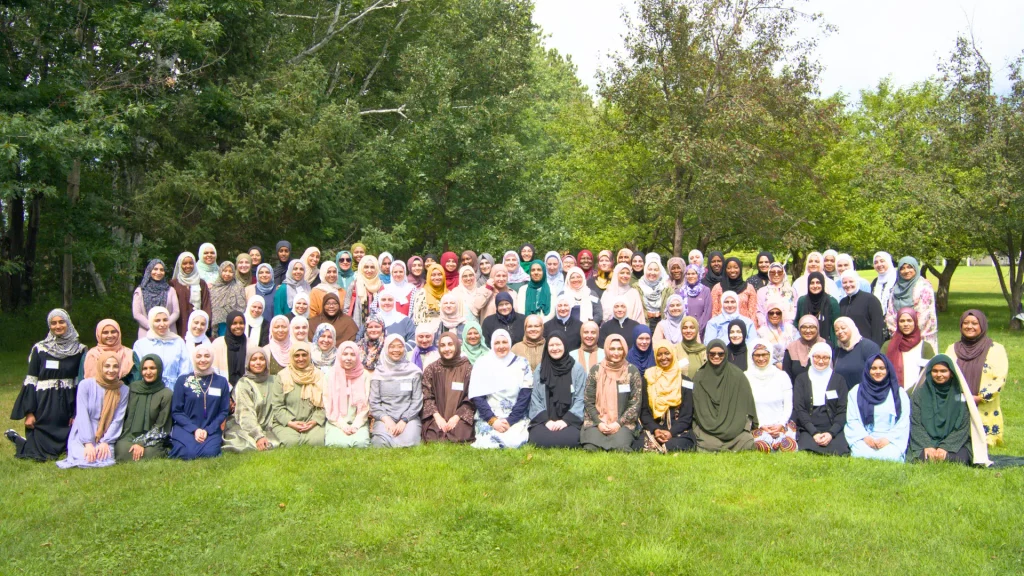
What do core memories look like for a 12-year-old girl? Learning to ride a bike with dad, baking desserts with mom, playing make-believe with an older sibling? For Illinois preteen Hafsa Quadri, it has been all of this and more since she is the youngest fundraiser for a Muslim women’s nonprofit called Rabata every year since 2019.
What initially began as simply donating her small sadaqah (charity) collection box to Rabata every Ramadan has now evolved into an annual crowdfunding effort by this young philanthropist. Since the age of six, Quadri has also been a beneficiary of Rabata as an Islamic Studies student in its children’s online educational program called Dragonflies.
“I really appreciate the sisterhood and community I have grown up with through Rabata,” Quadri shared. “It gives me a sense of belonging and makes me feel proud to be a young Muslim girl, and I want other girls to experience this too.”
Quadri said this mission is the reason she started fundraising for Rabata in the first place which has led her to earn the title of official ambassador. “I used to take whatever I collected during the year and personally deliver it to their headquarters in Minneapolis every Ramadan,” Quadri said. “I would sit with Rabata’s founder Tamara Gray, PhD, and we would count the money together. It would be a couple hundred dollars, which I could manage. However, when I was nine, I raised almost $400, and that’s a lot of money for a kid to be lugging around!”
Quadri then decided that she would try to find another way to raise money for Rabata. She received her own personal donation link and recorded a video of herself asking for family and friends to support the cause. She shared what this organization meant to her and asked for donations, repeatedly hitting new annual records year after year. However, this year, Quadri found an even greater motivation to raise funds.
Introducing Ribāṭ University
In Sept. 2026, Rabata launched Ribāṭ University (formerly known as the Ribaat Academic Institute), an online, degree-granting institution, offering undergraduate and graduate degrees, certificates, ijāza (formal license in Islamic scholarship) programs, and continuing education courses for Muslim women worldwide – the world’s only global university for Muslim women. Quadri plans to attend when she is ready for college in six years. “This Ramadan, I doubled my fundraising goal, because this is so important to me,” she said. Not only did Quadri meet her goal, she surpassed it by focusing on the idea of an affordable undergraduate and graduate program “for women, by women.”
An Accessible Option for Muslim Women
“Our daughters shouldn’t have to choose between sacred and secular education,” said Houston resident Heather Elsayed, 39, who works as the admissions officer for Ribāṭ University. “And we as women should have access to [affordable] education in any season of our lives, which is exactly what Ribāṭ is offering.”
To support this effort, Elsayed works closely with students, guiding them through a rigorous application process and finding inspiration for herself along the way. “Women have been telling me how they always wanted to get a degree or further their education but could not continue for one reason or another,” Elsayed said.
One of Ribāṭ University’s goals is to keep tuition as affordable as possible for students. Today, annual tuition and fees start at around $5,000 per year for their associate and bachelor of arts programs. Making traditional knowledge affordable and accessible has always been a vision of Rabata since its inception in 2011. Michigan endocrinologist Dr. Saadia Mian, 50, originally served as a member of Rabata’s founding board. She remembered the organization wanting to start a university as one of its long-term strategic goals. She has now returned onto the board grateful to see that vision take fruition and flight.
“We, as a board, wanted to provide something for generations to come and give access to sound Islamic scholarship to as many Muslim women and girls as possible,” she said, “especially in the current learning landscape where degrees are important and recognized.”
Houston-based Dean of Student Affairs Maha Gaafar, 45, is working to ensure that the university upholds a certain academic standard. She had been unofficially in this role since 2017, supporting, helping, and advising students to complete their teaching certification by 2020.
“That was our first graduating class, and I found myself really involved with student affairs,” said Gaafar. “Before discussions of transitioning Ribāṭ into an official university began, I had already started my masters in higher education administration to gain clarity and direction on what I can do better as an administrator. As I was learning about student affairs as a department, I saw there were many things we were already applying to Ribāṭ but not officially.”
Building Something that Will Last
What had once been a heartfelt effort now needed structure, compliance, and accreditation. The expansion of the team and addition of dedicated admissions support has not only lightened the load but sharpened the vision to serve women globally through accessible, structured, and spiritually grounded higher education. And the demand is already there.
“We have talked individually with many of the original Ribaat Academic Institute students about continuing their future studies at the university level with Ribāṭ,” stated Gaafar, who is now pursuing her doctorate in student affairs. “Many have shown interest and already applied for our graduate and post-graduate degree programs. Our goal is to reach 500 women; I’m aiming for 200 for starters.”
One of those students is Orlando optometrist Dr. Farhana Yunus, 51, of the first graduating cohort in 2020. She is applying for the Doctor of Theology in Islamic Belief and Practice at Ribāṭ for this coming Fall. If she was to pursue the degree full time, it would take approximately three years to complete. However, Ribāṭ aims to work within the different seasons of a woman’s life.
“I’m going to take my time with it,” said Yunus, who initially began her studies with Ribāṭ in 2013, taking one class at a time and building up from there. “I work full time as an optometrist and have five kids. I will need to see how much time I can dedicate to the program, but I appreciate the flexibility I have with Ribāṭ. I call myself a lifelong learner, so I will take any opportunity I can get to continue learning.”
Yunus said she has not been able to find an environment like Ribāṭ anywhere else and continues to share her knowledge and experiences with as many women as possible. She even takes what she has learned and brings it to her local community as a lead for the Orlando Rabata chapter. And after she completes her doctorate, she plans to give back by becoming a teacher for the university.
“The teachers [at Ribāṭ] become your mentors, and I want to emulate that,” stated Yunus. “I love the education Ribāṭ provides. We have amazing, qualified women as teachers, and we get to learn in an all-female environment. The spiritual sisterhood stays with you your whole life. Rabata and Ribāṭ are teaching us how to practice and live our faith as Muslim women in all facets of our lives, wherever we may be in the world. It is a global movement to bring positive cultural change through education, now taking institutional form. I want to help keep it going not for myself but for my daughter, my future granddaughters, great granddaughters, and those that will come long after we’re gone.”
Tayyaba Syed is an award-winning author, journalist, and teacher. She conducts literary and faith-based presentations for all ages and sits on the board of directors for Rabata, a women’s non-profit. The mom of three lives in Illinois with her family. Learn more at www.tayyabasyed.com.
Want more like this? Subscribe to the Islamic Horizons magazine and support authentic journalism by Muslims for Muslims.