True Success Forged through Collective Perseverance, Sustained by Faith
By Rashed Rabbi
Nov/Dec 26
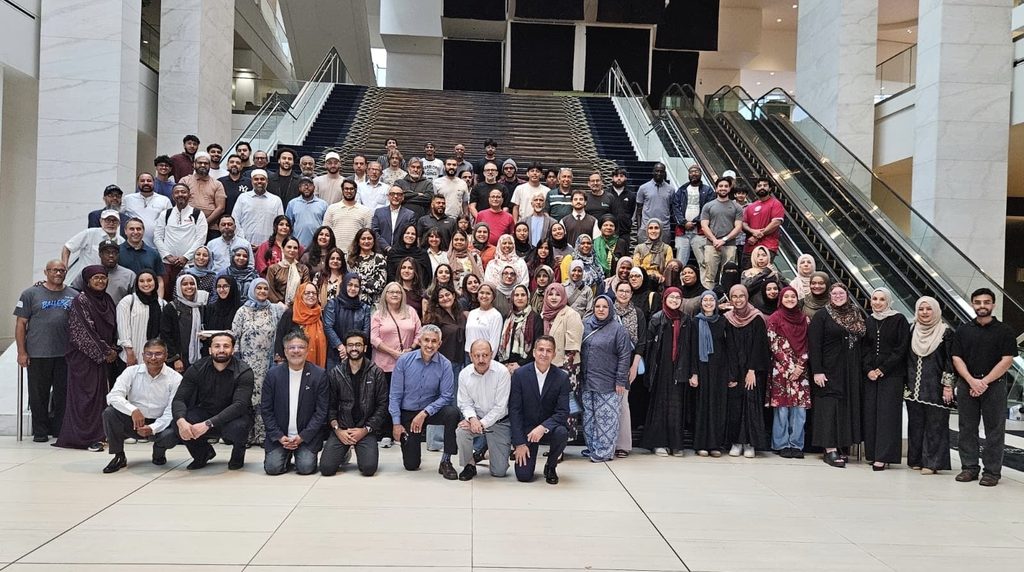
Over and over again, the Islamic Society of North America (ISNA) has anticipated the challenges of tomorrow and anchored the Muslim community at the center of America’s attention.
Over a year before Detroit emerged as a national political focal point, following the defeat of an AIPAC-backed campaign by a grassroots-supported Muslim candidate, ISNA had already announced its return to the city after a 12-year absence as host of its 2026 Annual Convention. What seemed like a routine site selection soon proved remarkably prescient as Detroit began to shape America’s political conversation.
No city better exemplifies Muslim contributions, community building, and collective prosperity than Detroit. With deep roots extending across the United States and Canada, Detroit provides the best setting to examine the future of Muslim life on the North American continent.
“We’re not simply here together for another convention. We’re here for community,” Rafique Ahmed, Vice President of ISNA Canada, said during the opening session.
Held over Labor Day weekend, Sept. 4 to 7, the 63rd Annual ISNA Convention brought together more than 20,000 Muslims from across North America. Over 150 speakers participated in a program spanning scholarship, spirituality, civic engagement, youth development, interfaith relations, community service, and the contemporary issues shaping Muslim American life. To support their seamless collaboration, more than 200 volunteers worked tirelessly behind the scenes.
Beyond celebrating visibility, ISNA sought to build on the foundations of Muslim success already evident in Detroit and offer a broader roadmap for the future. Attendance figures, the diversity of speakers, the hundreds of bazaar exhibitors, and the packed schedule of sessions were quantitative indicators of that vision’s reach. The deeper measure of success, however, was embedded in the convention’s theme: “Persevere, Interconnect, Be God Conscious, Strengthen Each Other for True Prosperity.”
Friday: Perseverance through God-Consciousness
Through Detroit’s cycles of industrial rise, economic decline, and civic renewal, the Muslim community demonstrated remarkable perseverance, building institutions, businesses, mosques, schools, and civic influence that now shape national conversations. The first session connected that success to Quran 3:200, where Zaynab Alwani (founding director of the Howard School of Divinity) highlighted four foundations of success: sabr (patience), musābarah (collective perseverance), murābaṭah (strategic vigilance), and taqwā (God-consciousness).
Waleed Basyouni (AlMaghrib Institute) warned against measuring success through conventional metrics or empty slogans that obscure the demands of perseverance. Pointing to Muslim Americans’ disproportionate presence in the professions, he argued that God-conscious perseverance underlies those achievements. Reinforcing this theme through the examples of Yusuf, Musa, Isa, and other prophets (alayhum as salam), Akram Nadwi (Dean of Cambridge Islamic College) called for a revival of prophetic character, a quality increasingly absent from contemporary U.S. leadership.
The next session focused on the Quran as a foundation of resilience. Drawing on contemporary research, Ramzi Mohammad (research director, Sky Foundation) argued that Muslims often concentrate on ritual worship, roughly 2% of Quranic commandments, while overlooking the broader moral (24%), social (17%), and intellectual (14%) vision. To close that gap, Fatima Lette (instructor at Qalam Institute) urged Muslims to integrate the Quran into daily life rather than confine it to occasional recitation.
Faraz Khan argued for the dual pursuit of faithfulness and excellence as the basis of meaningful social impact. Concluding the session, Zulfiqar Ali Shah (Fiqh Council of North America) pointed to the transformation of Prophet Muhammad (salla Allahu ‘alayhi wa sallam) through the Quran: an orphan becoming a messenger of mercy to humanity. Communities, he argued, rise through the same commitment to Quranic guidance.
God-conscious perseverance yields dignity, which became the focus of Friday’s final session. Ingrid Mattson (chair of Islamic Studies, Huron University College, and a former ISNA president) explained that protecting sacred inviolability (hurma) is not a one-time act but a sustained commitment, highlighting the Hurma Project’s initiatives. Drawing on the examples of Mu’adh ibn Jabal and Umar ibn al-Khattab (‘alayhum rahmah), Mohamed Hag Magid (resident scholar, ADAMS Center) emphasized that dignified communities emerge when people consciously uphold one another’s rights and needs. Referencing Quran 4:58, Abu Naser Jangda described safeguarding human dignity not as social courtesy but as a sacred trust. Ubaydullah Evans underscored personal responsibility for protecting the dignity of others and turning harm into opportunities for restoration and healing.
Friday’s sessions converged on a single message: perseverance is not passive endurance. It is resilience rooted in faith, guided by revelation, and expressed through the protection of human dignity. On Saturday, the convention shifted from spiritual foundations to the relationships, institutions, and civic engagement that convert resilience into collective strength.
Saturday: Resilience Through Communal Connection
Scholars, civic leaders, educators, and entrepreneurs collaborated across 13 main and 30 parallel sessions. Youth worked alongside elders to organize and lead 25 youth-focused sessions. National organizations joined with 20 local institutions to host half a dozen events.
The Saturday morning session focused on leveraging interconnection to civic power. Reflecting on the years of organizing that preceded the public successes of figures such as New York City Mayor Zohran Mamdani and Michigan Senate Candidate Abdul El-Sayed, Muhammad Gula (CEO of EmgageUSA) argued that influence is built long before it reaches headlines. Electoral victories matter, but lasting success lies in a community’s ability to create impact through participation: voting, organizing, donating, public speaking, etc. Husam Ayloush (CEO of CAIR California) rejected the notion that individual efforts are insignificant. From Gaza to domestic tragedies such as the shooting at the Islamic Center of San Diego, disengagement changes nothing; engagement creates the possibility of change.
But civic participation cannot be sustained without trust. The next session explored the values that make collective action possible. Drawing on Quran 4:135, Mikaeel Ahmed Smith (author and educator, Qalam Institute) argued that justice demands more than accepting diversity. It demands equality, equity, and empathy. Tamara Gray (founder and CEO of Rabata) contrasted fragile, unsafe, and healthy environments. Reflecting on the 1986 Challenger disaster, shortly after her conversion to Islam, she shared how the suppression of concerns can produce collective failure. Communities flourish only when every member can contribute and be heard equally.
From principles, the discussion moved to practice. Speakers emphasized relationships as the basis of belonging. Abdullah Waheed (Miftaah Institute) recalled how his South Asian immigrant father spent decades purchasing Eid gifts for hundreds of African American families, demonstrating that community is built through sustained care, not seasonal outreach. His Miftaah colleague, Mohamed Almasmari highlighted the Prophet’s practice of preserving bonds despite disagreement, while Muhammad bin Yahya al-Ninowy (Madina Institute) reminded listeners that all people share a common descent from Adam and should embrace diversity. We may have differences in preference, but it must never become prejudice. Love of God and His Messenger must remain the foundation of communal connection.
That sense of belonging extended across generations in American history. The afternoon session, marking America’s 250th anniversary, highlighted Muslim contributions from early Muslim explorers (Mansa Musa and others) and enslaved West African Muslims (Omar Ibn Said, Yarrow Mamout, Estevanico) to educators, activists, and faith leaders (Clara Muhammad and early Nation of Islam leaders). The message was direct: Muslims are not newcomers to the American story; they helped shape it. Najeeba Syeed (Claremont School of Theology) highlighted the role of interfaith engagement, which must be transformational rather than transactional.
Legacy, however, survives only when it is transmitted. The next main session shifted attention from historical inheritance to the formation of the next generation. Habib Quadri (educator and youth activist) presented the HEART framework: Hear, Explain, Anchor, Respond, and Teach Hope. Parents must listen before lecturing, explain before correcting, anchor children in faith, respond constructively, and cultivate hope. Muhammad Faqih (imam and religious director at the Islamic Institute of Orange County) drew on the examples of Luqman and Prophet Muhammad, summarizing the process in a simple maxim: affection before instruction; connection before correction. Psychiatrist Rania Awaad (Stanford University) reminded parents of their responsibility to protect their families (Quran 66:6) and concluded with the prayer for spouses and children to be “the comfort of our eyes” (25:74).
By the Saturday evening session, the theme of interconnection reached its apex. Tens of thousands filled the Huntington Place Convention Center in a powerful display of collective purpose. Dearborn mayor Abdullah Hammoud described public service as accountability before God and preparation for the Hereafter. El-Sayed, fresh from a victory over a heavily AIPAC-backed opponent, redirected celebration toward purpose. Political victories, he argued, matter only when they advance justice, whether addressing economic hardship at home or oppression abroad.
The evening closed with a challenge. Ieasha Prime (Dar al Hijra) urged Muslims to stand firmly for truth. Cenk Uygur (host of “The Young Turks”) criticized media narratives that marginalize Muslim voices and allowed AIPAC to hide behind Jewish community. Zaid Shakir (Zaytuna College) framed civic engagement as both a religious obligation and a constitutional duty, concluding with Langston Hughes’s “Let America Be America Again.”
Sunday: Success through Collective Impacts
Sunday turned to the convention’s final destination: true success and the responsibilities it demands. The morning session challenged attendees to move beyond comfort and embrace sacrifice in the pursuit of truth and justice. Syeed emphasized sabran jamila (12:18, 83; 70:5), a form of patience marked by contentment and steadfast perseverance. Drawing on Quran 5:8 and 4:135, Imam Shamsi Ali reflected on decades of advocacy since Sept. 11, grounding his work in trust in God as Al-‘Adl, Al-Hakim, and Al-Muqsit. Husam Ayloush noted that despite ongoing crises, from the persecution of Uyghurs to the devastation in Gaza and inequities in immigration enforcement, Muslim voices remain insufficiently heard.
That responsibility cannot end with the present generation. The next discussion focused on how faith, conviction, and leadership are transmitted across time. Mufti Abdul Wahab Waheed stressed that children learn primarily through imitation and warned against losing sight of God (59:19). Ramzy Nasr reinforced the parents’ educational role, while Mufti Hussain Kamani challenged attendees to cultivate the current age’s Imam Bukhari and Imam Ghazali. Like Prophet Ibrahim, he noted, each generation bears responsibility for preserving and transmitting faith.
From transmission, the conversation moved to its ultimate purpose. The conference’s final session connected perseverance across generations to collective flourishing. Muslema Purmul (chaplain at the University of Southern California) honored the courage of the San Diego martyrs, naming each – Amin Abdullah, Abu Mansour, and Nad Aad – to emphasize their sacrifices for the welfare of the broader community. Yahya Rhodus (Al-Maqasid) described collective well-being as a prophetic responsibility inherited by believers and argued that the highest form of gratitude is to use one’s God-given gifts for the benefits of others.
Such growth, however, develops under pressure rather than comfort. Perseverance is tested most severely by hostility and prejudice. Addressing that reality, Yasir Qadhi (The Islamic Seminary of America) posed the defining question: “Who are we going to become as a result of that hatred?” The answer, he argued, will shape the character of Muslims in America. Perseverance remains essential because “money can buy advertisements, consultants, and television time. But money cannot change the truth.”
Closing the convention, Zaid Shakir urged Muslims to demonstrate perseverance through action rather than rhetoric. He called for learning from the experiences of Native Americans, African Americans, Chinese Americans, and Japanese Americans, refining those lessons through divine guidance and directing them toward greater unity. Only then can perseverance produce enduring success.
Side Attractions and Parallel Sessions
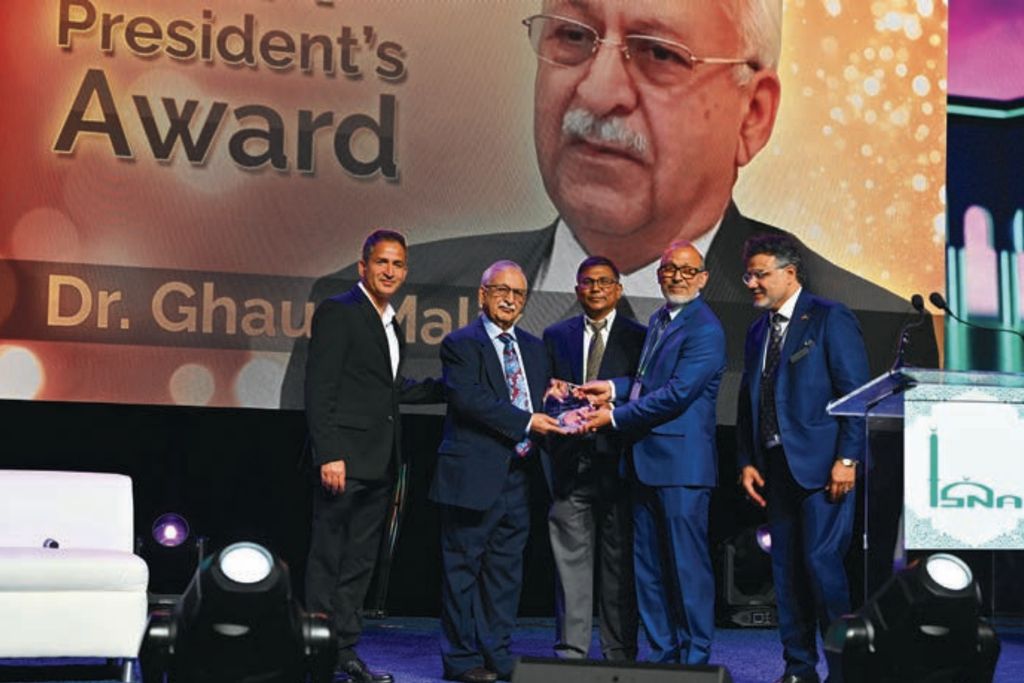
The same themes echoed far beyond the convention’s flagship sessions. Across the exhibition halls, service programs, youth activities, and specialized forums, attendees encountered practical expressions of the convention’s vision. More than 520 participants, including keynote speaker Former President of Pakistan Arif Alvi, attended the Community Service Recognition Luncheon honoring Mohammed Maged for his decades of service and leadership. The Interfaith Dinner welcomed approximately 220 guests, while the Government Leaders Breakfast brought together 55 public officials and community leaders for a highly engaging dialogue. ISNA’s Annual Impact presentation offered a roadmap for community growth and institutional development through 2030.
ISNA’s Health Services Committee highlighted initiatives promoting physical fitness, mental health, and nutrition within Muslim communities. MUHSEN reinforced the convention’s commitment to inclusion by advocating for greater accommodation and accessibility for individuals with disabilities. Through Noor Kids activities, crafts, and animal encounters, care and learning became a shared community experience for families and children.
The Association of Muslim Scientists, Engineers, and Technology Professionals (AMSET) hosted ISNA’s first-ever Hackathon for youth. While Saturday’s sessions encouraged mosques and nonprofit organizations to responsibly embrace artificial intelligence (AI), Sunday’s discussions emphasized ethical accountability, truthfulness, and authenticity in its use. Building on momentum generated by a packed audience, AMSET announced plans to continue the conversation through monthly AI-focused webinars and workshops leading up to the next convention.
The Qira’at Competition, Native Deen, and Preacher Moss added a celebratory dimension to the convention. The Muslim Youth of North America and Islamic Games organized basketball, pickleball, and badminton tournaments that attracted several hundred participants, maintaining the convention’s recreational spirit. Matrimonial events further fostered halal relationship-building and meaningful connections. These activities unfolded alongside the main program to reinforce the same, central lesson: institutions grow when people invest in one another.
All that Remains
The four-day convention ultimately returned to a simple question: what remains after the crowds disperse? The success of ISNA63 will not be measured by attendance. It will be measured by what attendees build after they leave. A teacher lifts a student. A chaplain comforts a patient, prisoner, or grieving family. A parent shapes a child. A mosque strengthens a neighborhood. A professional opens doors for those who follow. A scholar shares knowledge. A young Muslim learns that leadership is not a title to claim but a responsibility to carry.
This is how perseverance becomes prosperity. This is how individual success becomes collective strength. This is how a convention becomes a community, united by faith, bound by service, and committed to strengthening one another for true prosperity.
Dr. Rasheed Rabbi is an Islamic Horizons board member and the founder of e-Dawah and secretary of the Association of Muslim Scientists, Engineers and Technology Professionals. He serves as a khateeb at the ADAMS Center and is a certified Muslim chaplain at iNova Fairfax, iNova Loudoun, and Virginia’s Alexandria and Loudoun Adult Detention Centers.