Dignity Lies in Something Basic
By Marium Abid
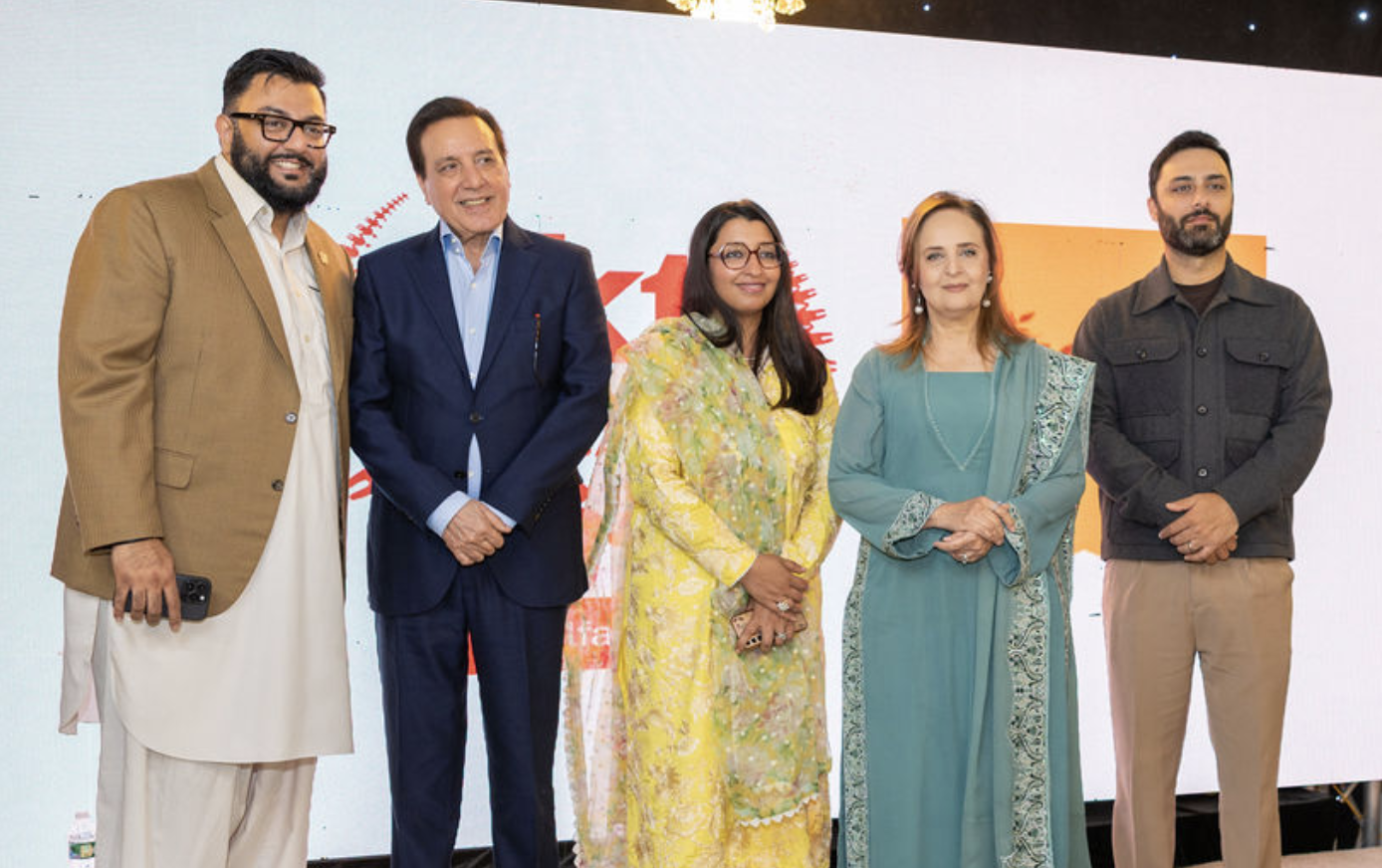
Muslims aren’t unfamiliar with the concept of giving. Every morning, my daughter and I start our day by putting a coin in our sadaqah (charity) box, and when it is filled to the rim, we give the amount to the local mosque. My parents taught me this ritual as a young girl, and now I am teaching it to my daughter.
It is a small act of giving which stems from one of Islam’s five pillars, Zakat, which strengthens believers’ faith and reminds us that whatever we give compounds into something bigger. SKT Welfare’s foundations are based upon the same premise.
U.K.-based nonprofit Spread Kindness Today (SKT) Welfare launched across four major American cities in May. In New York, Houston, Chicago, and Los Angeles, SKT brought together the Muslim American diaspora in partnership with Pakistan-based ARY Digital to make their mission of spreading kindness a reality on another continent.
The organization started in 2008 in a madrassa under the leadership of CEO Asif Hussain in order to bring relief to Pakistan’s flood victims. SKT Welfare has since grown into a global humanitarian organization with offices in the U.K., Australia, and Africa with operations in conflict zones like Gaza and Syria. With the tour in the U.S., they are now expanding their reach and planting roots in North America.
SKT’s Active Projects
The face behind the U.S. tour is SKT Welfare’s senior strategist Muhammad Fawad Zafar whose passion for the organization is immediately contagious. He passionately shares the story of a woman in Uganda whom SKT Welfare helped through their Shops for Sisters Project, a project that helps widows or single women become independent and earn their own living.
“SKT provides fully stocked shops, three months of rent, supplier connections, and ongoing training for a donation of $950,” Zafar said. “If [a] mother is empowered, she can empower the whole family.”
Zafar cited the example of a Shops for Sisters beneficiary. She could neither read nor write, but now she measured her earnings through the pile of bank notes: “In the morning, it’s this much. Evening, this much. Alhamdulillah.” The program has a 100% success rate across 113 shops in Sudan and Uganda built to date. Zafar said it is this kind of grounded, field-level exposure with their beneficiaries that sets SKT apart.
For men, SKT provides motorcycle rickshaws that are registered in the organization’s name to ensure accountability. “The income is theirs. We [just] monitor,” Zafar said.
The projects SKT champions don’t have any boundaries, but are driven from research and need. In places like Tanzania, Malawi, Uganda, Kenya and Sudan, where close to 100,000 Muslim refugees live in government camps with precious few amenities, SKT is building and renovating mosques.
“Everyone has their own representation. Muslims had none,” said Zafar. On the opening day of the first mosque SKT built in a Sudanese refugee camp, 23 people took their Shahada.
“That gave us inspiration and a boost,” Zafar said. “I packed my bags, went to Australia for their launch, and spoke about this project. We received funds for five more mosques. I came back to the U.K. [and] went on live television. Funds for five more mosques were received. Altogether, 12 have been built so far.”
In off-grid villages across Sindh, Pakistan, SKT is installing $475 solar kits including two panels, an inverter, a battery, two lights, two fans, and a sewing machine. “[In the past], as the sun set, life [was] gone for these families,” Zafar explained. “Now they can work as long as they can.”
The provision of sewing machines is deliberate; women who have long made intricate patchwork by hand can now make and sell their work themselves, cutting out the middlemen who have historically exploited their craft.
SKT in the U.S.
The Houston launch of SKT Welfare on May 17 – with the theme “Dignity Lies in Something Basic” – kicked off with Zafar drawing attention to cataract surgery camps in Pakistan which were the focus of the Houston and L.A. tours. Zafar informed that the demand in these camps is overwhelming. “Within two days of announcing a camp, we received more than three thousand applications,” he shared with the audience. He said the goal for the night was to raise awareness about these camps and help patrons understand where their funds go.
“Each surgery restore[s] sight, dignity, and independence to some of Pakistan’s most vulnerable communities,” he said.
Fundraising, Zafar insists, is only part of the picture. “I don’t need your dollar,” he said, with a directness that silenced the room. “Ask us everything. Understand us. Learn about us. And then when you give — stay with us.”
Zafar said what SKT is really building in the U.S. is a network of ambassadors, people who understand the work deeply enough to carry its message forward. He measures success not in dollars raised, but in the business cards given out on such events.
The organization plans to return to the U.S. in November targeting more cities and holding more events. One mosque has already been donated by a New York patron while a second patron is in discussion. Slowly, SKT is expanding its footprint to the Muslim American community.
And truly, what stood out most in that room in Houston was the diversity of the audience. The Pakistani and Muslim diaspora is vast and varied – the first-generation immigrants who built lives here, the second-generation young professionals navigating dual identities, and the Gen Z cohort filled with energy for engagement that goes beyond a donation link.
SKT understands this distinction. “The money is with the 45 and above,” he said candidly. “But the younger ones want activities.” For them, SKT develops fundraising activities: treks through Morocco, nights in the Sahara, trips to Zanzibar so young donors transform into lifelong ambassadors.
A Revolution in Charitable Giving
There is something quietly radical about this model. Historically, charity landscapes are driven by emergency appeals and viral images of suffering. SKT is making the case for sustainable, research-led development. “Do not rely on what [the] media tells you,” Zafar said, reflecting on the hardest lesson the organization has learned. For example, when the Syrian Civil War officially ended and the mainstream media declared the crisis over, SKT knew the reality on the ground was very different. “The key to real humanitarian work is working across thematic areas, and not just following the trend.”
The panel in Houston brought together well-known voices such as Hina Bayat, a veteran Pakistani actress and a woman whom her community describes as “a woman of substance.” She spoke about the intersection of faith and action. “If you have faith,” she said, “you get passionate about [action].”
Ahmed Ali Akbar, a Pakistani actor and former tennis player, spoke about his inspiration to join the organisation. He reminisced about someone braver than him who had done a charity drive at his own school which always stuck with him.
Javaid Sheikh, another veteran Pakistani actor whose connection to overseas communities runs deep and who has been on the ground in one of the cataract camps, was unequivocal about SKT. “There are a lot of institutions, but the work SKT does is unique and different,” he said. “Anyone who associates with them stays with them.”
What united everyone in that room in Houston was not the celebrity element but the meaning of ordinary lives somewhere else. Akbar spoke about his plans to go to the site of one of the projects soon, while Bayat spoke of being in war zones in Syria and with children from Gaza who remember her as Mama Hina. Such stories from the field punctuated the evening, and in some cases, even silenced the room.
Dignity, the room was reminded again and again, lies in something very basic. It could be one loaf of bread or eyesight which sees beyond the blurry landscapes.
I left the Houston event thinking about my daughter and our sadaqah box. The coin she drops in every morning is small, but it is intentional. SKT Welfare is built on the same understanding. From the mosques rising in Ugandan refugee camps to the solar panels lighting up homes in rural Sindh, from the shops owned by women who were once abandoned with nothing, to the cataract camps restoring sight across Pakistan, every project is the sum of small, faithful, consistent acts of giving.
“Before being donors, be ambassadors,” Zafar said. “Ask us everything. But when you give, stay with us.”
Marium Abid is a Houston-based writer and a digital transformation consultant. She is a single parent to a 5-year-old and uses her storytelling platform to create awareness around identity, diaspora, single parenting, and the experiences of South Asian women.
Want more like this? Subscribe to the Islamic Horizons magazine and support authentic journalism by Muslims for Muslims.