And Who Gets Hurt
By Aslam Abdullah
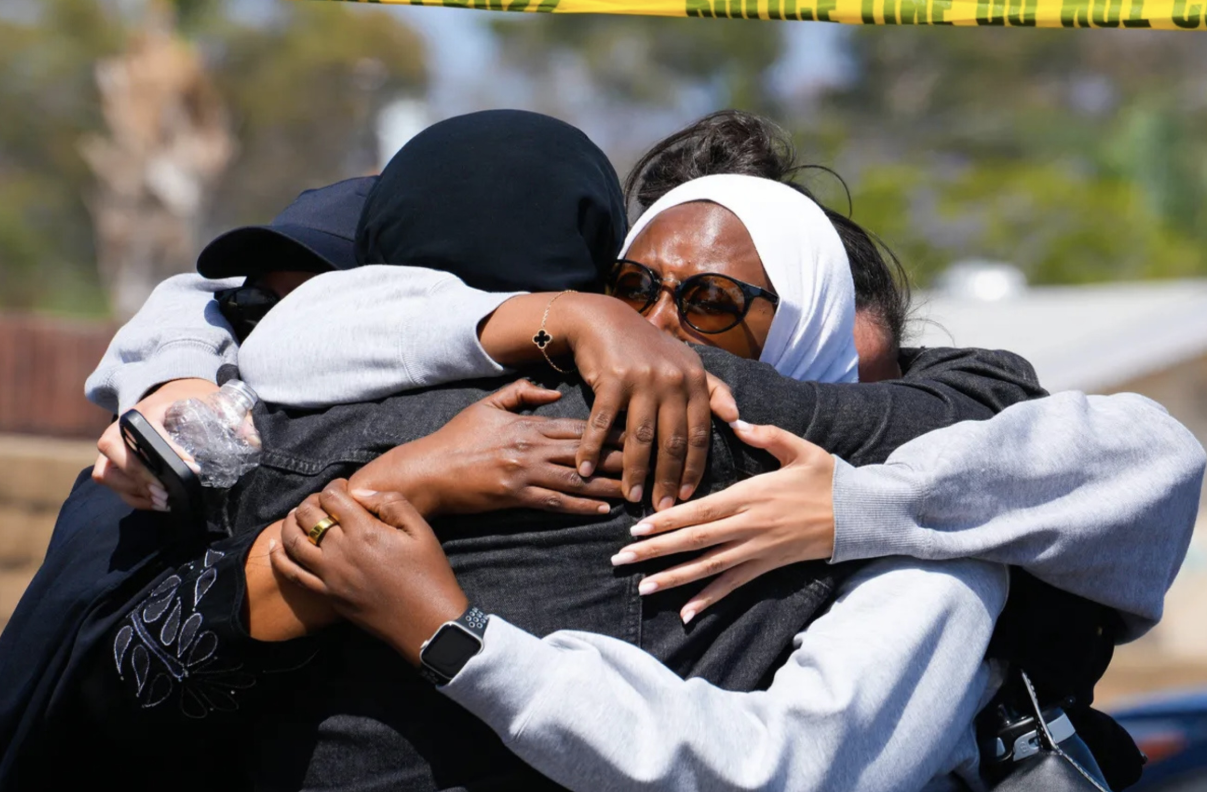
The attack on the Islamic Center of San Diego (ICSD) on May 18 was not an isolated act. Like many hate crimes in modern America, it unfolded within a larger atmosphere shaped by years of inflammatory rhetoric, online radicalization, conspiracy theories, and the normalization of hostility toward religious and racial minorities. While investigators determine the precise motives behind the attack, the broader national context reveals a troubling reality: the United States has entered an era in which hate has become organized, monetized, amplified, and industrialized.
According to the FBI, the United States recorded approximately 10,700 hate-crime incidents in 2025. Although this represents a modest decline from the 11,679 incidents reported in 2024, experts emphasize that these figures still rank among the highest levels recorded since federal hate-crime tracking began in the early 1990s. Advocacy organizations and researchers repeatedly caution that these numbers likely capture only a fraction of actual incidents because many victims never report attacks and many law enforcement agencies either fail to participate fully in federal reporting systems or classify incidents differently.
The FBI defines hate crimes as criminal offenses motivated wholly or partly by bias related to race, religion, ethnicity, sexual orientation, disability, or gender identity. Yet behind the statistics lies a deeper social reality: hate crimes do not arise in a vacuum. They are often preceded by narratives that portray entire communities as threats, outsiders, invaders, or enemies. Repeated often enough, such narratives create what many scholars now describe as a “hate industry” — an ecosystem of political rhetoric, social media campaigns, sensational media content, fundraising networks, and ideological activism that profits from fear and division.
Hate Crime Statistics in the Contemporary United States
Since 2020, several distinct patterns have emerged in American hate-crime data. Race-based hate crimes remain the largest category every year, with anti-Black incidents consistently representing the single biggest bias category in the country. Anti-Jewish hate crimes have risen sharply since 2022 and now dominate religion-based hate crimes. Anti-Asian incidents surged during the COVID-19 pandemic. Anti-Muslim and anti-Sikh incidents increased following international conflicts and rising political polarization. LGBTQ-related hate crimes also climbed significantly as cultural battles intensified across America’s political landscape.
African Americans continue to face the largest number of hate crime incidents nationwide. In 2020, the United States recorded approximately 3,886 anti-Black hate crimes during a year marked by pandemic tensions, nationwide protests, and political unrest. Although the numbers later declined somewhat, anti-Black incidents remained historically high, with more than 3,000 reported cases in 2024.
Jewish Americans have experienced one of the sharpest increases in targeted hate crimes in recent years. Anti-Jewish incidents rose from roughly 950 in 2020 to nearly 1,938 in 2024, as reported by the Pew Research. Following the outbreak of the Israeli genocide of the Palestinians in Gaza in Oct. 2023, antisemitic incidents surged dramatically across the country. Although Jewish Americans comprise roughly 2% of the U.S. population, they account for approximately 70% of religion-based hate crimes. Synagogues, schools, community centers, and visibly Jewish individuals have increasingly become targets of threats, vandalism, harassment, and violence.
Muslim Americans also remain among the most targeted religious communities in the United States. Reported anti-Muslim hate crimes rose from approximately 110 incidents in 2020 to 228 in 2024, with a particularly sharp increase following the Gaza genocide. Mosques, Islamic schools, Muslim-owned businesses, and visibly Muslim individuals frequently become targets during periods of geopolitical crisis. The attack on the Islamic Center of San Diego (ICSD), therefore, fits within a broader national trend in which international conflicts fuel domestic hostility toward ordinary Muslim Americans who bear no responsibility for events overseas.
Sikh Americans, despite their relatively small population, continue to experience disproportionately high levels of hate crimes. Many Sikhs are targeted because attackers mistakenly associate turbans and beards with extremist stereotypes about Muslims. Anti-Sikh incidents rose significantly after 2020, peaking near 198 incidents in 2022 before declining slightly in subsequent years. Sikh advocacy organizations have repeatedly warned that ignorance, racial profiling, and extremist propaganda continue to place their communities at risk.
Hispanic and Latino communities also faced rising hostility linked to anti-immigrant rhetoric, border politics, and demographic anxieties. By 2024, reported anti-Latino hate crimes had climbed to nearly 800 incidents annually.
LGBTQ communities likewise saw significant increases in hate crimes after 2020. In 2024 alone, hate crimes against gay men exceeded one thousand reported cases, while anti-transgender incidents surpassed 335. Researchers note that political and cultural polarization around gender identity and sexuality contributed to an increasingly hostile environment for many LGBTQ individuals.
The Extremism Industry
What connects these trends is not merely prejudice itself, but the machinery through which prejudice is produced, circulated, and amplified. Social media platforms now allow conspiracy theories and inflammatory content to spread at unprecedented speed. Algorithms reward outrage, anger, and fear because emotionally-charged content generates clicks, engagement, advertising revenue, and political mobilization. A sensational anti-Muslim post, antisemitic conspiracy video, racist meme, or anti-LGBTQ rant can reach millions within hours. Online ecosystems then reinforce these narratives through repetition, creating digital communities where hatred becomes normalized and validated.
Many scholars and civil rights organizations describe modern extremism as an industry. Hate today is not merely personal animosity; it is often institutionalized through networks of media personalities, influencers, political campaigns, online fundraisers, ideological organizations, and algorithm-driven platforms. Fear becomes profitable. Outrage becomes monetized. Entire communities become symbolic targets in broader political and cultural wars.
The attack on ICSD, therefore, raises urgent questions about the relationship between rhetoric and violence. When political figures describe Islam as incompatible with Western society, when commentators repeatedly equate Islam with terrorism, when online networks circulate endless narratives portraying minorities as invaders or threats, some individuals internalize those messages in dangerous ways. Most people exposed to hateful rhetoric never commit violence, but repeated dehumanization lowers moral barriers and creates environments where aggression becomes easier to justify.
Responding to Hate
The response to such attacks, however, reveals another side of American society. After hate crimes targeting mosques, synagogues, Black churches, Asian communities, and LGBTQ centers, interfaith coalitions and civic organizations often mobilize rapidly in solidarity. Religious leaders, neighbors, activists, and ordinary citizens gather to condemn violence and reaffirm constitutional principles of equality and religious freedom. These moments demonstrate that hate does not define the entire nation, even when it becomes highly visible.
Yet solidarity alone cannot fully address deeper structural problems. The rise of the hate industry challenges America to confront how political incentives, media ecosystems, and digital technologies increasingly reward division. A society saturated with fear-based narratives eventually risks normalizing suspicion toward entire groups of people. When that happens, violence becomes not an aberration but a foreseeable consequence of a culture increasingly shaped by anger and dehumanization.
The ICSD attack should therefore be understood not only as a criminal act against one religious community, but as part of a larger warning about the state of American public life. Hate crimes are rising across multiple communities because the narratives fueling hatred increasingly circulate without restraint. The challenge facing the nation is not merely how to punish individual attackers, but how to resist the broader systems that manufacture fear, amplify prejudice, and turn division into a profitable enterprise.
Aslam Abdullah, Ph.D., is a Resident Scholar at Islamicity.com.