Preserving Our Well-Being While Staying Informed
By Wendy Ayala
May/Jun 26
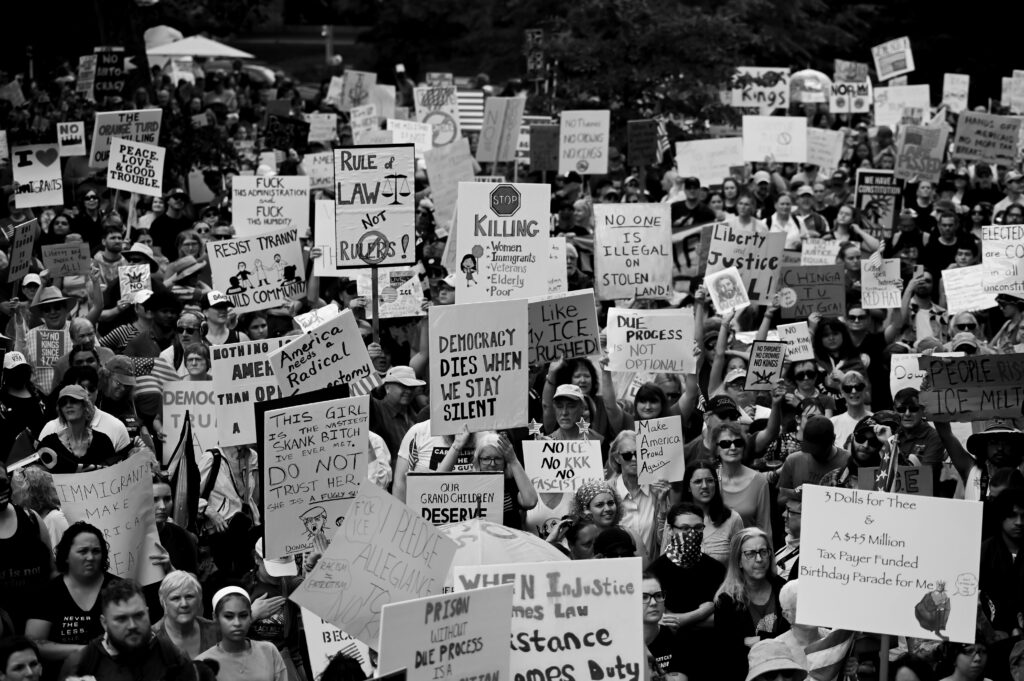
In times of political unrest, it can feel as though the world is constantly pulling our hearts and minds in different directions. News cycles, social media debates, and the suffering of our Ummah can leave us feeling overwhelmed, anxious, or even hopeless. Islam recognizes the emotional weight of living through uncertain times and offers guidance not only for our actions, but for the care of our hearts and minds. Through the teachings of the Prophet Muhammad (salla Allahu ‘alayhi wa sallam), Muslims are reminded that maintaining inner balance, sabr (patience), and tawakkul (trust in God) are essential for navigating uncertainty.
The following seven practices are drawn from Islam to help people remain spiritually grounded and emotionally balanced during turbulent times. Experiencing worry, sadness, or uncertainty does not mean any weakness of faith; rather, these moments invite people to turn back to God with greater awareness, patience, and trust. Even the previous prophets experienced moments of deep sorrow and hardship, which reminds us that emotional struggle is part of the human experience.
1. Acknowledge Your Emotions Without Shame
Begin by acknowledging and identifying the emotions you are feeling, while keeping in mind that it is normal for human beings to feel uneasy during difficult times. God reminds us in the Quran, “Indeed, humankind was created impatient” (70:19).Feelings of anxiety, restlessness, or worry are part of human nature. Islam does not ask people to deny their emotions, but rather to recognize them while turning to God for strength.
The Quran reassures, “God does not burden a soul beyond that it can bear” (2:286). This serves as a gentle reminder that even in the moments of distress or sorrow, people have been given the capacity to endure and grow through difficulty.
2. Anchor Yourself in Salah
When the world feels unstable, prayer restores sakīnah (tranquility) in our hearts and minds. Salah (prayer) allows Muslims to pause, disconnect from the surrounding noises, and reconnect with God. The Quran states, “Seek help through patience and prayer” (2:45). The Prophet would turn to prayer whenever he felt distressed. Regular prayer provides emotional grounding and reminds Muslims that ultimate control belongs to God.
3. Limit Harmful Information Overload
Constant exposure to distressing news and political debates can overwhelm the mind and heart. Islam encourages Muslims to practice taqwa (God consciousness) in what they consume and for the information with which they engage. In many ways, this means not only striving to purify their hearts, but also being mindful of what they allow their eyes and minds to take in. Just as we try to guard our hearts from harmful influences, we should occasionally step back and reset our habits with media and online platforms.
The Quran reminds us, “If a troublemaker brings you news, verify it”(49:6). Protecting mental health sometimes means stepping away from constant news consumption and setting healthy boundaries with the media.
4. Strengthening Tawakkul
Political instability can make people feel powerless. Tawakkul reminds Muslims that while they take action and care about justice, the ultimate outcome belongs to God: “And whoever relies upon God – He is sufficient for them” (65:3). Trusting God does not mean ignoring reality; it means believing that His wisdom and justice extend beyond what we can immediately see.
The Prophet also reminded of this reliance when he said to IbnʿAbbās (radi Allahu ‘anh), “If you ask, ask God. And if you seek help, seek from God” (Tirmidhi). While the world around us may feel uncertain, the ultimate source of strength, help, and support remains with God alone. Tawkkul allows the believer to act with sincerity while leaving the weight of outcomes in God’s hands.
5. Turn to Dhikr and His Names for Inner Calm
The remembrance of God is one of the greatest sources of emotional and spiritual relief. In moments of distress, turning back to God through dhikr (remembrance) and reflecting on His beautiful names can help bring the heart back to a place of calm and trust. The Quran states,“Indeed, in the remembrance of God do hearts find rest” (13:28).
During these times, politics might have an impact on the way we experience the divine, the way we turn back to God, and how we’re able to reconnect with His names. Therefore, calling upon God through His names reminds Muslims of what they might need the most right now. When we feel overwhelmed, we should remember Al-Latif (The Subtle, The Refined) and understand His subtle control of worldly affairs. When the future feels uncertain, reflecting on Al-Hakīm (The Most Wise) reassures that God’s wisdom encompasses what humans cannot see. And when hearts feel heavy, turning to Ar-Rahmān and Ar-Rahīm (The Most Compassionate, the Most Merciful) reminds that Allah’s mercy is greater than any hardship we face.
Simple acts of dhikr – such as saying SubhanAllah, Alhamdulillah, and Allahu Akbar – can bring calm and clarity to a troubled heart.
6. Focus on Small Acts of Good
During difficult times, focusing only on problems can lead to feelings of helplessness. Islam encourages believers to respond to hardship through acts of goodness and service.
The Prophet said, “The most beloved people to God are those who are most beneficial to others” (Al-Mu’jam al-Awsaṭ lil-Ṭabarānī 5937). Helping others – whether through charity, community support, or kindness – restores a sense of purpose and hope.
7. Hold Onto Hope
Finally, Islam teaches believers to never lose hope in God’s mercy and justice.
The Quran reminds, “Indeed, with hardship comes ease” (94:6).
Political turmoil and social challenges are not permanent. Maintaining hope helps protect the heart from despair and strengthens our resilience.
It would be a disservice to yourself and those around you to shut yourself out from the world. God has created Muslims as a balanced community (2:143), and they are encouraged to nurture both the outward and inward aspects of their well-being. Some practices take form in the physical sense such as prayer, limiting harmful information, and acts of service while others take place in the heart and mind – acknowledging emotions, strengthening tawakkul, engaging in dhikr, and holding onto hope. Both are necessary.
As the constant flow of media continues, separating politics from daily life may seem impossible. In these times, Muslims are reminded that ultimate control belongs to God. Difficult times test one’s patience, but they also invite one to deepen the faith, strengthen the character, and embody the mercy and resilience taught in the Quran and the Sunnah: “God intends ease for you, and does not intend hardship for you” (2:185).
Wendy Ayala, MSW, is an associate psychotherapist at Khalil Center with over six years of experience serving diverse populations. Since embracing Islam in 2020, she integrates faith-centered care to support individuals and families.
Want more like this? Subscribe to the Islamic Horizons magazine and support authentic journalism by Muslims for Muslims.