You Have to Fight to Get Your Rights
By Safia Khan
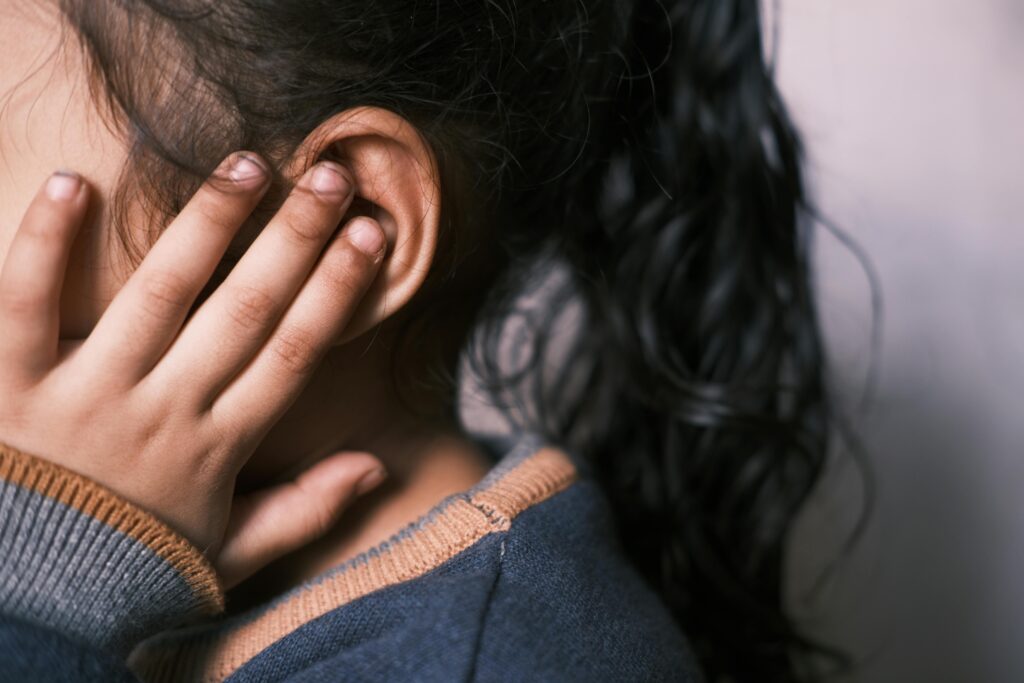
From a young age, we are taught that if you are bullied, you should tell a teacher. But what are you supposed to do when your teacher is the bully? Who should you tell? What are you supposed to do when you go to others for help, and they defend and protect the wrongdoer?
A common assumption about children with disabilities is that they are being taken care of, that their needs are addressed at home and, especially, at school. The latter is not always true.
According to the National Center for Education Statistics, 15% of American public school students have disabilities. According to Columbia University News, 85% of deaf and hard of hearing children attend a mainstream school, a school that integrates students with disabilities in classrooms with their able-bodied peers.
In these classrooms, there is no guarantee that students with disabilities will not be discriminated against by a teacher. I know because I was one of those students.
My Story
I grew up able-bodied. In November 2017, my life came crashing down. For months, I had headaches that lasted for hours and caused me to experience hearing loss.
An MRI and a consultation with a neurologist led to the discovery of tumors resting on my auditory nerves. The growth and eventual surgical removal of the tumors in my brain caused me to lose my hearing.
After nearly a year in recovery, I started my freshman year of high school. I was ready to return to a semblance of a normal life with significant hearing loss from my surgeries.
I knew nothing about deafness or about my rights in the classroom as a person with a disability. I didn’t know how to ask for the support I am entitled to receive at a public school.
Once back at school, the Special Education team there provided me with inadequate technology. They told me the more advanced assistive technology that was needed to support me in the classroom was too expensive.
When the Special Education department told me they would not provide me with better assistive technology, I asked my teachers to accommodate me instead. Two teachers kicked me out of their classrooms and asked the counselor to remove me from their rosters.
Special Education and school administrators never addressed the discrimination. When I went to other teachers for help, instead of helping me, they defended their colleagues’ wrongdoing and gaslit me about the discrimination I was facing. School district officials made me feel guilty and troublesome for asking for better assistive technology, claiming it was too expensive.
The best thing the Special Education department in my home district ever did for me was to send me to a different high school in another district that would be able to address my needs. Even after that, it took a fight to stay there because my home district actively worked to remove me and return me to my original school to save money.
When I spoke out for my needs and expressed the effect my school’s actions had on me, a school administrator told me I was making my experience sound more traumatic than it actually was.
Once I learned of my medical condition, my world revolved around my illness and adjusting to my newfound deafness. I wrongly assumed my school would have my best interests at heart.
Looking back years later, I could have instigated a legal battle that would have drained all parties involved. The problem with justice and the pursuit of it is that it is very costly. My mother quit her job to care for me after I became ill, and my father became the sole working parent. I didn’t know that legally fighting against discrimination was an option because prior to attending my new high school, I knew nothing of my rights.
I am not writing this to seek revenge or to placate any bitter feelings. I made peace with the fact that I experienced discrimination and overcame it. Although my experiences at my first high school were negative, they made me a stronger person.
I’m writing this to try and stop a terrible situation such as mine from happening again. I’m writing this to raise awareness. I’m writing this for 15%.
I am proud of myself for succeeding in my fight against my home district and eventually graduating from the high school that better suited my needs. I am grateful to my district for allowing that. Everything else my district did to accommodate me was within my rights.
Nevertheless, what I went through still haunts me, mainly due to a profound lack of awareness of how students with disabilities can be treated within the public school system.
A Broken System
Special Education within public schools is systematically flawed. Until district officials and administrators examine the institution of Special Education, the best you can do for your child or for yourself is to try to work around the system to receive the best accommodations possible.
If your child has a disability and is attending school, the best thing you can do for them is to send them to a well-funded public school since they have more resources. If that is not possible, see if your school district can transfer your child to a better-funded school.
Private schools should be avoided. Very few of them receive federal funding that requires them to adhere to a student’s Individualized Education Plan. Most follow the lenient laws surrounding a 504 plan – a formal agreement between a school and a student’s family that provides accommodations for students with disabilities – which requires private schools to only make “minor accommodations.”
While parents and educators can’t control the funding public schools allocate to resources for students with diverse needs, that doesn’t mean that they are completely helpless.
Advocating for your child’s needs helps ensure they can thrive academically. If you need further assistance, consult an educational advocate, someone who is specially trained in disability law, to learn more about your child’s rights within schools.
Raise your voice. Advocate for the unheard.
Safia Khan is a senior studying English at the University of Illinois Urbana Champaign. She has been published in numerous publications, including The Wall Street Journal.
Want more like this? Subscribe to the Islamic Horizons magazine and support authentic journalism by Muslims for Muslims.