Symbols, Substance, and Moral Proportionality
By Faisal Kutty
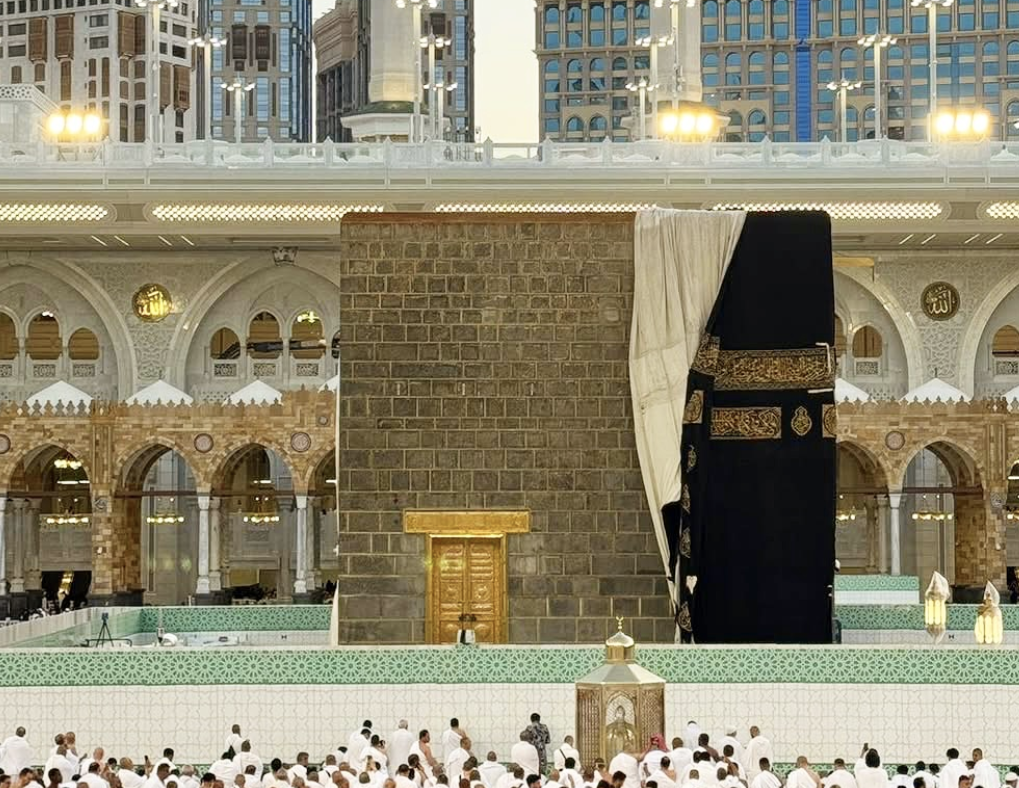
Many Muslims reacted with intense anger to reports that fragments of the Kiswah — the sacred cloth that covers the Kaaba — had been gifted to convicted child sex offender and billionaire Jeffrey Epstein. Social media quickly filled with denunciations and expressions of outrage. Yet at the same time, thousands of children, women, and elders were being killed on live television in Gaza. Disturbingly, some of the same voices that cried for a piece of cloth remained silent. That contrast should give us pause not because concern for the Kiswah is misplaced, but because it reveals how some Muslims rank moral priorities.
The Kiswah is not simply a decorative object or a cultural curiosity. It covers the House of God, the focal point of Muslim prayer and pilgrimage, and symbolizes humility before God, unity among believers, and reverence for sacred space. For centuries, it has been treated with care and dignity. Millions of pilgrims have touched it in moments of deep vulnerability and devotion. If outward religious symbols were meaningless, Islamic law would not have prescribed embodied practices — prayer postures, pilgrimage rites, modest dress, or communal rituals. Islam is not a purely internal faith. It is lived in public and private, in body and conscience.
The annual practice of covering the Kaaba with the Kiswah has pre-Islamic origins and was continued by Prophet Muhammad (salla Allahu ‘alayhi wa sallam) and his successors.
Beyond Symbolism
At the same time, Islamic tradition has always insisted that symbols derive their meaning from moral purpose. The Quran states, in the context of sacrifice, “It is neither their meat nor their blood that reaches God, but what reaches Him is piety from you” (22:37). The verse establishes a foundational principle: ritual matters, but ethical consciousness matters more. The Prophet reinforced this when he taught that God does not judge people by appearances, but by hearts and deeds (Muslim). External observance is necessary, but never sufficient.
In the instruction of law, one is trained to think in terms of proportionality, hierarchy of harm, and moral consequence. Legal systems function only when they distinguish between minor infractions and grave injustices, between symbolic violations and irreversible harm. A society that loses this capacity becomes unstable and unjust. The same is true of religious communities. Not all wrongs carry the same weight. Not all violations deserve the same level of outrage. Moral seriousness requires sound judgement and clear discernment.
The Quran articulates this hierarchy clearly: “Whoever kills a soul… it is as if he has killed all of humanity” (5:32). Human life is the highest of protected interests. Classical Islamic jurisprudence reflects this in the doctrine of Maqasid Al-Shari‘ah, the higher objectives of the law. This doctrine prioritizes the preservation of life, dignity, intellect, and justice. Religious symbols exist within this framework. They serve it. But they cannot replace it.
Reversing the Moral Order
When outrage over sacred objects eclipses concern for mass death, something has gone wrong in our moral reasoning. The Kiswah is sacred because it points toward the sanctity of life, not because it exists as a special object. When we defend cloth more fiercely than children, we reverse the moral order that Islam itself establishes.
Part of this imbalance is shaped by modern media. Social platforms reward visible anger, performative piety, and quick condemnation. They do not reward sustained advocacy, uncomfortable truth-telling, or long-term solidarity with the oppressed. It is easier to express outrage over symbolic “disrespect” than to confront political violence, occupation, or complicity. The former carries little personal cost. The latter often does.
In legal ethics, silence in the face of injustice is not neutrality. It is complicity. Lawyers are taught that failing to speak when one has a duty to do so can be as harmful as acting wrongly. A similar principle applies morally. When suffering is visible and persistent, selective outrage becomes a form of moral evasion. It allows us to appear principled without bearing the burden of principle.
Islam has long been cautious about allowing material symbols to displace ethical responsibility. There are no images of the Prophet on display in mosques and there are no sanctioned relics in Islamic practice. There are also no clerical intermediaries in Sunni orthodoxy. These absences reflect a deep concern about idolatry — about confusing representation with reality. History shows that even well-intentioned reverence can slide into obsession, and obsession into distortion. Symbols can be co-opted, commodified, and weaponized. Without ethical grounding, they become hollow.
The Quran criticizes those who pray while neglecting social responsibility: “Have you seen the one who denies the Judgment? That is the one who repulses the orphan and does not encourage feeding the poor” (107:1–3). The criticism is not of prayer itself. It is of prayer disconnected from justice. Worship that does not shape character and conscience is incomplete.
None of this minimizes legitimate concern about how sacred objects are handled. If fragments of the Kiswah were misused, that raises serious questions about custodianship, power, and accountability. Those questions deserve careful investigation. But our responses must reflect a coherent moral hierarchy. As lawyers speak of the “gravity of harm,” believers must do the same.
Regaining Moral Authority
A community that treats symbolic violations as more urgent than systematic killing risks losing moral credibility. Over time, it teaches its members — especially the young — that appearances matter more than outcomes, that outrage matters more than compassion, that defending objects matters more than defending people.
This is not about shaming others. It is about honest self-examination. The Quran urges believers, “Let every soul look to what it has sent forward for tomorrow” (59:18). Our public priorities are mirrors of our internal values. They reveal what we are willing to defend, what we are willing to risk, and what we are willing to ignore.
Islam does not ask us to choose between symbols and substance. It asks us to integrate them. To honor sacred spaces while defending human dignity. To perform rituals while pursuing justice. To display faith while embodying it. The Prophet taught, “The best of you are those who are best in character” (Tirmidhi). Moral excellence, not symbolic mastery, is the ultimate measure.
The Kiswah deserves respect. So do children.
In any coherent ethical framework — religious or secular — no object, however sacred, outweighs a single innocent life. If we can recover that clarity, our symbols will retain their meaning. And our faith will regain its moral authority.
Faisal Kutty is a lawyer, academic, writer, public speaker, and activist focused on human rights, civil liberties, international law, comparative law, international affairs, media bias, and national security.
Want more like this? Subscribe to the Islamic Horizons magazine and support authentic journalism by Muslims for Muslims.