What Liberation Looks Like for Muslim Women
By Tracy Miller
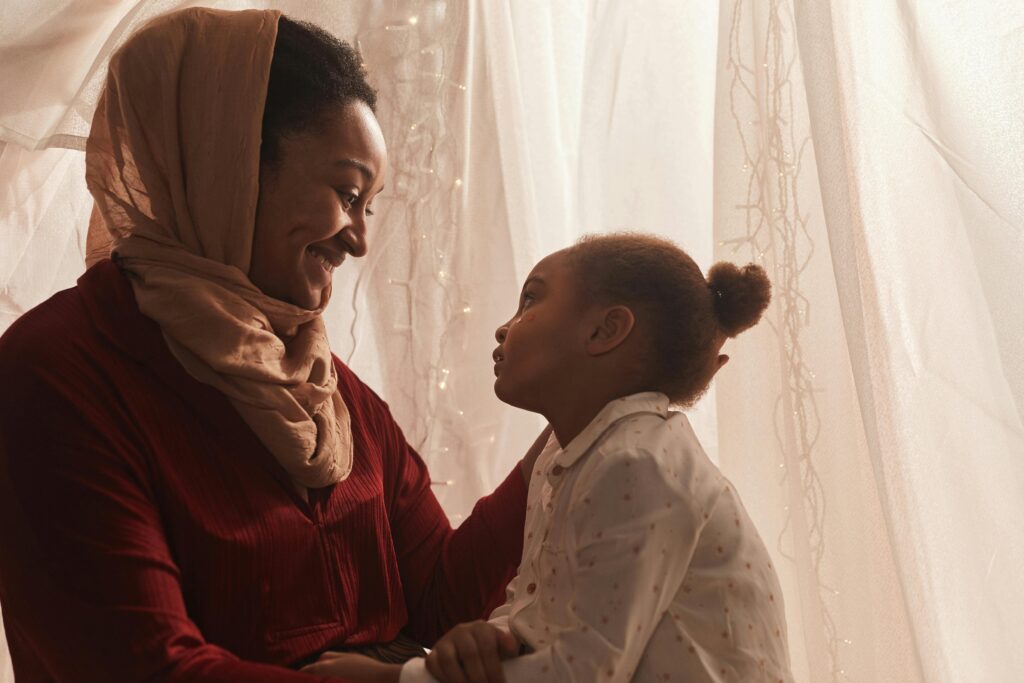
I did not grow up hearing the word “feminism” spoken with warmth. It arrived later in classrooms, online threads, panel discussions usually carrying the implication that women like my mother had somehow missed it. Apparently, Muslim women were late, still learning the language of liberation.
But when I look back at the women who raised me, I don’t see absence. I see strategy. I see women who did not have the luxury of naming their resistance because they were too busy forging it for themselves .
My mother never called herself a feminist. Neither did my aunts nor the women who ran entire households while men worked abroad; who memorized prayer schedules and rent deadlines with the same precision; who navigated immigration systems that were not designed for them; who held families together with unpaid labor that was seldom ever credited.
If feminism is the pursuit of dignity under constraint, then Muslim women were practicing it long before anyone gave them permission, and long before the West decided what counted.
The Problem With Being Included
Every March, Women’s History Month arrives with its familiar rituals: Panels, quotes, social media graphics, and lists of “trailblazing women.” The celebration often feels generous until you notice who’s missing.
Muslim women are usually framed as late arrivals to liberation. We are invited cautiously, conditionally, often with explanation required. Our stories are welcomed only when translated into recognizable frameworks: empowerment stripped of faith, resistance divorced from religion, strength proven by proximity to secular norms. The hijab becomes a problem to overcome. Faith becomes a contradiction to explain. Tradition becomes something survived rather than shaped.
This framing depends on a quiet erasure of the idea that Muslim women were not already negotiating power before Western feminism saw us. It assumes liberation must be loud to be real, must be public to be valid, and must be confrontational to count. And it forgets that many women never had the option of visibility, only endurance.
The Feminism that Lived in Kitchens
The feminism I know did not happen on stages. It happened in kitchens at dawn. It looked like my aunt waking before everyone else to prepare food she would later sell discreetly through community networks, cash folded carefully into envelopes that paid school fees and medical bills when men’s incomes fell short.
No nonprofit funded her, no grant recognized her entrepreneurship, no news article praised her resilience. She built an informal economy from trust and necessity. She negotiated autonomy without announcing it. She carved power where none was offered.
That is not submission. That is intelligence.
Many Muslim women learned early that survival required creativity more than confrontation, that challenging patriarchy directly was too costly . So resistance took on subtler forms.
They influenced quietly, redirected decisions, and controlled finances with quiet authority. They created women-led networks inside mosques, homes, and extended families. Their feminism was not about individual liberation; it was collective, intergenerational, deeply practical. They did not ask, “What do I deserve?” They asked, “How do we endure?”
And endurance, when chosen actively, becomes its own form of rebellion.
Faith Is Not the Opposite of Freedom
One of the most persistent myths about Muslim women is that faith limits us, that devotion and autonomy exist in opposition. But for many women, faith is not a cage. It is language.
Islam gave structure where the world offered chaos. It offered moral authority in environments where women were otherwise dismissed. Muslim women quoted scripture not as obedience, but as negotiation. They used religion the way others use law: as a tool. They invoked rights embedded within tradition long before outsiders noticed them. They reminded men of the responsibilities they preferred to forget. They claimed spiritual legitimacy in spaces that attempted to silence them.
This is the part of the story that Western feminism forgets because Western feminism often imagines freedom as separation from religion, from family, from obligation.
But liberation does not look the same when your survival is collective.
The Cost of Publicity
Muslim women’s feminism remains invisible because it was never documented. It lived in conversations, in memory, in repetition, and in oral instruction passed from mother to daughter. History favors what is written down, preferably in English, preferably in institutions that already hold power.
Our mothers did not publish manifestos; they published lives. They taught girls how to speak carefully and when to speak boldly. They taught silence as protection and speech as timing. They taught patience not as passivity, but as long-term resistance.
None of this fits easily into academic frameworks so it disappears, and then we are told we have no history. There is a particular loneliness that comes from realizing your mother’s life will never be studied.
History prefers women who announce themselves. My mother and so many women like her survived by disappearing strategically. She learned when visibility was dangerous, when asking questions would invite punishment. Endurance was not weakness but calculation. These choices are often misunderstood by people who believe resistance must always look like refusal. But refusal is not the only way women push back. Sometimes resistance looks like staying alive long enough to raise daughters who will ask the questions you simply could not.
When Western feminism frames liberation exclusively as leaving, breaking, or rejecting, it overlooks the women who practiced transformation from inside, who shifted households slowly, who softened hard rules through persistence, and who protected younger girls by absorbing the consequences themselves.
This sacrifice is rarely mistaken for power but it requires extraordinary strength. There is violence in being told your survival does not count as politics, in being told your choices were too small, too quiet, too compromised to matter. But what is more political than choosing life inside systems designed to exhaust you? What is more radical than insisting on dignity when none is promised?
Muslim women were never passive recipients of culture. They were active interpreters of it, editing, reshaping, and renegotiating it daily. They learned to speak multiple languages at once: faith to elders, pragmatism to institutions, tenderness to children, strength to themselves.
Yet this intellectual labor does not flatter dominant ideas of feminism. It suggests feminism does not own the blueprint for freedom and that women have always been theorists of their own lives even without the language to describe it.
Our mothers were not waiting for feminism to arrive. They were practicing it in fragments in choices, in negotiations, in care, in their refusal to disappear completely even when silence was demanded. And if we listen closely, we can still hear them – not asking to be celebrated, only asking not to be forgotten.
Their feminism was not neat. But then again, neither is freedom
When Feminism Refuses to Recognize Us
What gets lost when publicly named feminism is the only kind that counts? Everything – entire lineages of women who were never waiting to be liberated because they were already doing the work, just not in a way that translated cleanly to Western theory.
When feminism refuses to recognize faith-based resistance, it reproduces the very hierarchy it claims to dismantle. It decides whose struggle is legitimate and whose must be mediated. It says liberation must look a certain way to be real.
But Muslim women were never trying to be legitimate. They were trying to live.
I Inherited More than Silence
Growing up, I did not inherit feminist theory first. I inherited memory. I inherited the stories of women who made decisions quietly and paid the price loudly from women who balanced dignity against danger every single day. Only later did I encounter the language that claimed to explain them and found it insufficient.
Muslim women like my mother and aunts navigated systems stacked against them: patriarchy, racism, immigration precarity, Islamophobia – often all at once. To call them less than feminist because they did not use the word itself feels not only inaccurate, but cruel.
A Different Feminist Timeline
Muslim women complicate feminist timelines because they disrupt the idea of progress as linear. Their resistance did not move cleanly from oppression to freedom. It looped, adjusted, retreated, and advanced.
It was strategic, not symbolic, because not all women can afford visibility. Not all resistance can survive the spotlight. Our mothers were not waiting to be saved. They were busy saving everyone else. And they deserve to be remembered not as women who lacked feminism but as women who practiced it long before the world learned how to pronounce their names. Women’s History Month cannot keep expanding its table while deciding whose stories require translation to be worthy.
Muslim women do not need to be added to feminism. We were already there, shaping it quietly, carrying it forward, holding it together with hands the world refused to see. And maybe the most radical thing feminists can do now is not speak for us but finally listen.
Tracy Miller is a writer whose work explores culture, faith, identity, and social justice. She is particularly interested in the intersection of religion, gender, and community narratives. When she’s not writing, she spends time researching cultural histories and reflecting on everyday acts of resilience.
Want more like this? Subscribe to the Islamic Horizons magazine and support authentic journalism by Muslims for Muslims.