Ensuring Longevity While Maintaining Trust
By Hamza
Nov/Dec 26
There is a moment that happens in almost every business community when someone asks difficult questions: “Where did the money go? Who made this decision? Why was this person given authority? Who is responsible?”
Sometimes the questions are welcomed. Sometimes the questions themselves are treated as an attack.
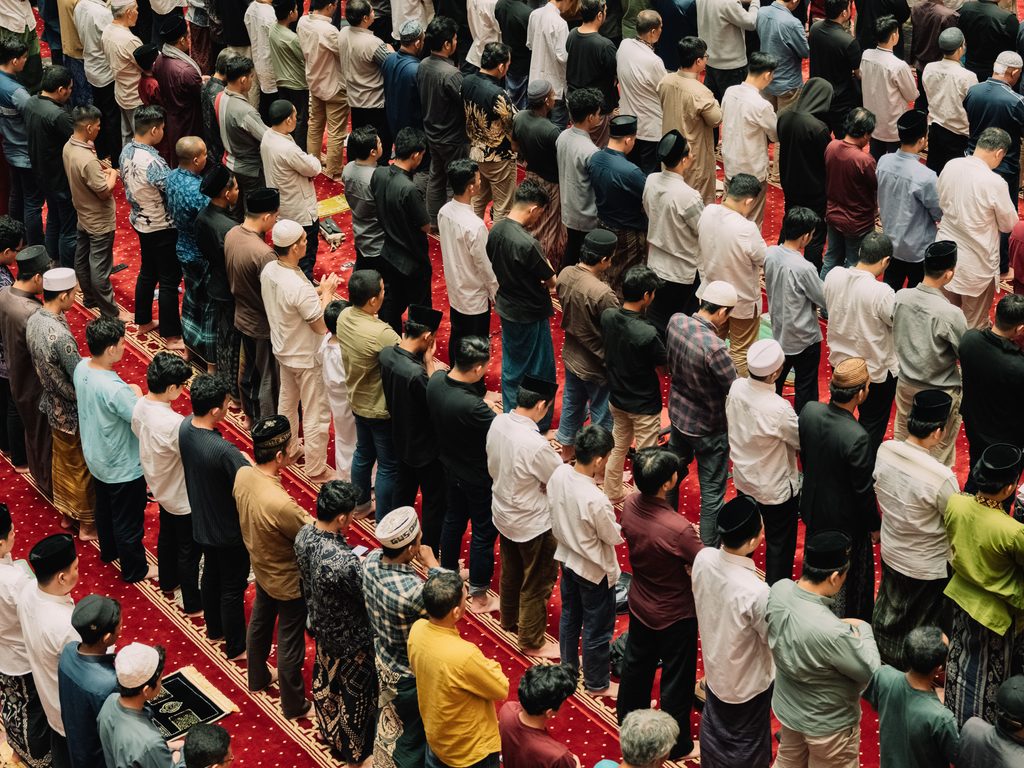
For Muslim communities, this scenario creates an important problem. They need institutions such as mosques, schools, charities, youth organizations, and community centers that can preserve faith, educate children, and serve people long after individual leaders have moved on.
But institutions are made of people. And people make mistakes. Protecting an institution should not mean protecting it from accountability. Accountability ensures an institution can continue serving the community while making sure that the people entrusted with it remain answerable for what they do.
The Quran states, “Indeed, God commands you to render trusts to whom they are due and when you judge between people to judge with justice” (4:58). The word trust, or amanah, is important here. Leadership is not simply a position. It is something entrusted to a person.
When someone becomes president of a mosque, board member of an Islamic school, director of a nonprofit, or administrator of charitable funds, they are not simply gaining authority. They are accepting a crucial responsibility.
The institution belongs to a mission larger than the individual. However, communities sometimes confuse loyalty to an institution with loyalty to the people currently running it.
Institutions Outlive Individuals
One of Islamic civilization’s greatest achievements was the creation of institutions that could outlive individual rulers, scholars, and donors. The waqf is one of the clearest examples.
For centuries, Muslims established endowments that supported mosques, schools, hospitals, public services, and charitable activities. These institutions were designed to serve purposes beyond the donor’s lifetime. The institution, therefore, became more important than the individual.
Modern research on Islamic waqf governance continues to emphasize that these institutions require trust, accountability, consultation, and effective governance if they are going to fulfill their social purpose.
This is an important lesson for Muslim communities in the West. Institutions should be built around principles, not personalities. A mosque should not collapse because one imam leaves. A school should not lose its mission because one principal retires. A nonprofit should not become the personal property of its founder.
A community should be able to say, “This institution existed before this person, and God willing, it will exist after them.”
Accountability Is Not Betrayal
In some Muslim communities, questioning leadership can sometimes be interpreted as disloyalty. However, there is a difference between criticism that destroys and criticism that protects.
Asking for financial transparency, requesting clear policies, asking how decisions are made, creating procedures for handling complaints, and having independent oversight is not betrayal. In fact, these things can be expressions of amanah.
Prophet Muhammad (salla Allahu ‘alayhi wa sallam) demonstrated that principle himself. In a well-known narration in Sahih al-Bukhari, a man appointed to collect zakat (obligatory charity) returned and separated what he claimed were funds belonging to the community from gifts he said had been given to him personally. The Prophet publicly challenged the distinction, asking why the man had not simply remained in his parents’ home to see whether those gifts would have come to him there (Bukhari 6979).
The lesson is bigger than the individual incident. Authority creates access. Access can create conflicts of interest. Therefore, authority needs accountability.
The Prophet did not consider questioning the handling of community funds as an insult to the collector of those funds. Rather, he treated public trust very seriously.
What the History of Waqf Teaches
The history of waqf also demonstrates that Islamic institutions were never simply informal expressions of religious enthusiasm. They developed structures. They required documentation. They involved administrators. They created legal responsibilities. They needed systems for managing property and resources.
Modern scholarship examining the history of waqf governance from the Prophetic era through the Ottoman period describes an evolution toward increasingly developed systems of documentation, administration, and oversight.
That history matters because, sometimes, Muslims talk about organizational structure as if it is somehow foreign to Islam. It is not.
Having a board, financial controls, an independent audit, term limits, and procedures for investigating complaints is not un-Islamic. These are tools for organizational transparency.
The question is whether those tools are being used in service of justice and amanah.
The Need for Strong Muslim American Institutions
Muslim communities in the West need institutions capable of operating professionally and independently. A mosque is not only a place for Friday prayer; it can become a school, a food distribution center, a counseling service, a place for young people, a refuge for new Muslims, and a gathering place for families.
Islamic schools educate the next generation. Charitable organizations respond to poverty and crisis. Advocacy organizations defend civil rights. Muslim media organizations tell stories that mainstream institutions often overlook.
These institutions are part of the infrastructure of Muslim life.
The Journal of Islamic Faith and Practice has recommended stronger nonprofit management practices. If our institutions matter, then we should want them to operate at the highest possible standard.
The Danger of Personality-Based Institutions
One of the greatest threats to institutional health is the concentration of too much authority around one person.
The charismatic leader can build an institution quickly. People trust them, donate because of them, attend because of them, and defend them.
Eventually, however, the institution can begin to resemble the personality of its leader rather than the principles it was created to serve.
If every criticism of the leader becomes a criticism of Islam, then accountability becomes impossible. If every disagreement with the board becomes an attack on the mosque, then governance becomes impossible. If donors believe they are supporting an individual rather than an institution, succession becomes difficult.
Strong institutions should be able to survive disagreement. That requires something that is sometimes uncomfortable: limits. No one should be so important that the institution cannot function without them.
Accountability Protects the Vulnerable
Institutions hold power over people. A school holds authority over children. A mosque holds authority within a Muslim community. A nonprofit holds donated resources. A community leader may have influence over families.
Whenever there is a difference in power, there must be mechanisms to prevent that power from being abused. Accountability, therefore, cannot only be about money.
It must also include conduct. Who handles complaints? What happens when someone reports misconduct? Are conflicts of interest disclosed? Are employees protected when they raise legitimate concerns? Are children protected? Are financial records properly maintained? Are leaders evaluated? Can community members ask clarifying questions?
These questions force institutions to look at themselves. But uncomfortable questions can save institutions.
Accountability Must Also Be Fair
There is a danger on the other side. If communities become so suspicious of institutions that every accusation is automatically treated as truth, they can destroy organizations that took decades to build.
Accountability requires evidence, process, and fairness. Islam does not ask believers to abandon justice because they are angry. The Quran commands believers to stand firmly for justice even when it is difficult (4:135).
This means Muslim communities need to reject two extremes. The first is blind loyalty. The second is destructive cynicism.
Blind loyalty says, “Do not question the institution.” Cynicism says, “Every institution is corrupt.” Neither position is healthy.
The better position is protecting the institution, following available evidence, and upholding justice.
Building Institutions that Last
What would this look like in practice?
It could mean independent boards rather than boards controlled entirely by one person. It could mean published financial reports, regular audits, clear policies, term limits, transparent hiring practices, regular community meetings for major decisions, leadership evaluations, and more. None of these practices guarantee perfection, but they make abuse of power less likely.
The Journal of Sharia Economics pointed toward the same conclusion: religious commitment and organizational governance should not be treated as competing ideas. Research on U.K. mosques, published in Financial Accountability and Management in 2026, argues for clearly defined accountability boundaries grounded in spiritual morality, while studies of waqf institutions emphasize governance, reporting, and cooperation between internal and external stakeholders.
This is perhaps where the conversation needs to change. Muslims should stop asking whether their institutions need accountability. Instead, they should start asking what kind of accountability best reflects Islamic values.
Protect the Institution, Not the Ego
Muslim communities in the West are still building their institutional future. The mosques, schools, nonprofits, and organizations being established today may still exist decades from now. Our responsibility is therefore larger than protecting what exists.
We have to build institutions that deserve to be protected. That means protecting them from external hostility, internal dysfunction, financial mismanagement, cults of personality, and the concentration of unchecked power. It means creating institutions that are strong enough to receive criticism and humble enough to learn from it.
The goal should never be building institutions that cannot be questioned. The goal should be to build institutions that have nothing to fear from transparency.
That is not weakness. That is amanah.
Hamza is a writer and researcher and the founder of Nascent Oasis. His work explores Muslim history, culture, media, and social issues with a focus on fostering understanding through storytelling. He is passionate about highlighting overlooked narratives and the contributions of Muslims to global civilization.