Understanding Stigma and Support
By Salman Shaheen Ahmad
May/Jun 26
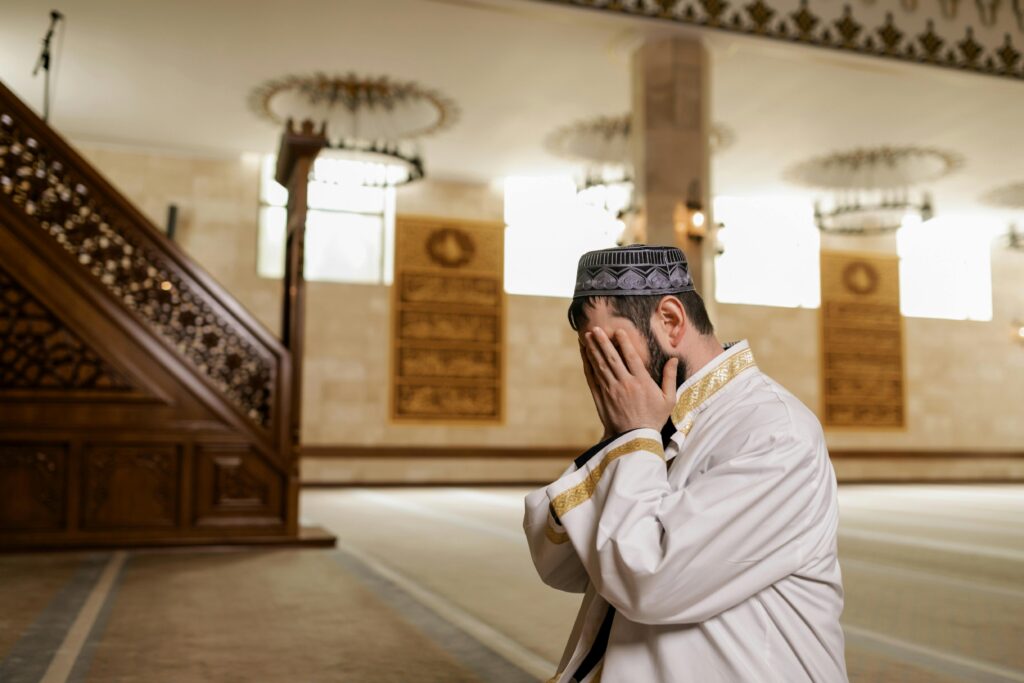
In recent years, mental health has become an increasingly important topic both globally and within Muslim communities. However, this was not always the case. For many years, mental disorders were placed into a single category: “crazy.” Diagnosable conditions were often dismissed or seen as irrelevant to some Muslims, sometimes justified through selective interpretations of scripture such as “verily, with hardship comes ease” (Quran 94:5).
To combat this stigma, Muslim communities must have a better understanding of what mental health is and the kinds of support available for those struggling with mental illnesses.
Mental health refers to our emotional, psychological, and/or social well-being. These aspects affect how we think, feel, manage stress, and relate to others. These God-given emotions serve important functions. For example, anxiety can protect us by reminding us to look both ways before crossing the road. But when emotions cause significant distress or impairment affecting work, personal relationships, and/or daily functioning, they may indicate a mental disorder. Importantly, when individuals are able to recognize these signs of distress and impairment, they are far more likely to seek help.
Mental disorders, such as major depressive disorder or social anxiety disorder, affect thinking, mood, and behavior and may require professional support. They arise from a combination of biological, psychological, and social or environmental factors that interact to increase risk for a disorder. As with physical health, most people will experience some mental health difficulty in their lives. Some challenges resolve on their own, while others may become more severe and require longer-term care. Early recognition and intervention can significantly reduce their impact.
A Complicated History and a Missed Legacy
Early approaches to mental illness were often inhumane and sometimes included long-term institutionalization. Over time, advances in medicine and scientific research led to more compassionate approaches focusing on accurately diagnosing and treating disorders. Many researchers, including those shaped by the profound traumas of the 20th century, contributed to the development of evidence-based psychological treatments by implementing lessons from their lived experiences in well-funded scientific endeavors.
However, these developments did not reach all communities equally. In many Muslim societies, stigma and limited access to care slowed the adoption of modern mental health practices. The field itself continues to face important debates and limitations, but significant progress has been made.
At the same time, an important part of Islamic intellectual heritage has been largely forgotten. Scholars of the Islamic Golden Age not only advanced fields such as chemistry and algebra but also described mental disorders and holistic approaches to their treatment over a thousand years ago. These approaches integrated spiritual, medical, psychological, and social dimensions of care. While some historical practices are no longer considered effective (e.g., bloodletting and alchemy), others such as reframing unhelpful patterns of thinking (cognitive restructuring) and gradually facing situations that unnecessarily cause us to feel afraid (incremental exposures) closely resemble modern, evidence-based treatments.
This legacy demonstrates that mental health is not foreign to Islamic tradition and that empirical methods are an important way to find solutions to mental disorders as they have been for other diseases. It also reflects a long-standing commitment to understanding human well-being through both faith and reason. Yet this history is rarely recognized in modern textbooks of mental health, contributing to the perception that these conversations are new or incompatible with Islamic cultures and values.
It is true that healing ultimately comes from God, and that patience and prayer are central to finding comfort. At the same time, the Prophet (salla Allahu ‘alayhi wa sallam) encouraged seeking treatment and caring for ourselves and one another. In many communities, however, mental health has been avoided due to stigma and fear of judgment. It has often felt safer to ignore distress and hope it resolves on its own, rather than to seek help. Some also use spiritual beliefs and practices to avoid facing difficulties (called spiritual bypass), but this was also discouraged by the Prophet as demonstrated by teachings such as “tie your camel and trust in [God]” (Al-Tirmidhi 2517).
Avoidance, however, is a hallmark of many mental health difficulties and is often a key focus of treatment. When combined with broader challenges such as conflict, economic instability, discrimination, and intergenerational trauma, the impact on the mental health of our Ummah can be profound. But people are resilient, and when faced with difficulties in themselves or their families and communities, they are motivated to find solutions.
Reclaiming Intellectual and Spiritual Heritage
In recent decades, scholars, clinicians, and community leaders have been investigating why many Muslims don’t seek mental health care and are working to address mental health needs in Muslim communities. Efforts have included developing Islamic approaches to care (e.g., Traditional Islamically-Integrated Psychotherapy), adapting evidence-based treatments to align with Islamic beliefs and values (e.g., Islamic Trauma Healing), and increasing awareness and access to services.
This work has taken many forms. There are now annual conferences dedicated to Muslim mental health (like Michigan State University’s Muslim Mental Health Consortium), 24/7 hotlines for Muslim youth and families (e.g., Naseeha), financial assistance programs for those who cannot afford care (e.g., Friends of Humanity), and directories of Muslim providers (e.g., Ruh Care). There are also emerging efforts to bring these resources together in more centralized and accessible ways (e.g., the Muslim Psychology Center, or the Inclusive Muslim Mental Health Alliance). These developments reflect a growing recognition of the need for culturally- and spiritually-responsive care, as well as a commitment to addressing longstanding gaps in services.
At the same time, high-quality research on Islamically-integrated treatments remains limited, often due to a lack of funding and trained researchers. Continued investment in both community-based initiatives and scientific research will be critical for sustaining and expanding these efforts.
From Awareness to Understanding: Why Mental Health Literacy Matters
Alhamdulillah, the tides are beginning to change. Yet acknowledging the importance of mental health alone is not enough. Many still lack clear, accessible, and trustworthy information about mental health and seeking support.
This gap highlights the importance of mental health literacy, the knowledge and skills needed to recognize mental health concerns, understand available supports, and respond effectively. This includes knowing when stress becomes something more serious, understanding treatment options, and feeling confident navigating available resources.
For Muslims, the pursuit of knowledge is deeply rooted in tradition. Seeking beneficial knowledge is an obligation, and acting upon it is a responsibility. Mental health literacy is not separate from faith; it is a continuation of it. Just as Muslims encourage the pursuit of medicine and other fields, they should also encourage learning about and contributing to the advancement of mental health care.
Building a More Connected Path Forward
Recognizing this need, the Islamic Society of North America (ISNA) launched its Mental Health Initiative to promote mental well-being and resilience across Muslim individuals, families, and communities. The initiative aims to make mental health knowledge more accessible, relevant, and grounded in Islamic values.
Rather than creating new systems from scratch, the initiative seeks to connect and uplift the many scholars, clinicians, and organizations already engaged in this work, while making their resources easier to find and use. ISNA’s mission is to foster the development of the Muslim community s by facilitating existing efforts while also contributing its own.
The initiative focuses on several priorities:
- Connecting mental health to Islamic teachings and history
- Helping individuals and families recognize challenges and seek appropriate care
- Sharing tools to build resilience using both Islamic and evidence-based approaches
- Improving access to trusted resources for prevention, support, and crisis situations
- Supporting providers in delivering culturally and spiritually responsive care
While preventing all mental health difficulties may not be possible, increasing knowledge, reducing stigma, and strengthening resilience can help communities respond earlier and more effectively. ISNA encourages the community to follow and engage with these efforts as it begins to share resources.
Supporting mental health in Muslim communities requires more than any one profession can offer. Counselors, social workers, marriage and family therapists, chaplains, imams, community leaders, families, and friends all play essential roles in recognizing distress and helping individuals access care. When people can recognize signs of distress and understand how these challenges affect their daily functioning, they are far more likely to seek help or encourage others to do so.
This is the promise of mental health literacy: not that it removes hardship, but that it enables us to respond with clarity, compassion, and action. Muslims are called to seek knowledge, care for one another, and take the means available to them while placing trust in God. By strengthening understanding of mental health and making use of available resources, Muslims can move from silence and uncertainty toward support, resilience, dignity, and collective wellbeing. In doing so, they embody the Prophetic guidance to tie their camel – acting upon the means available to them – while placing trust in God.
Dr. Salman Shaheen Ahmad is a clinical psychologist and postdoctoral fellow at the University of Pennsylvania. His work focuses on cultural and spiritual factors influencing mental health and its care. He serves as Chair of ISNA’s Mental Health Initiative.
Want more like this? Subscribe to the Islamic Horizons magazine and support authentic journalism by Muslims for Muslims.