Muslim Military Chaplaincy in 2026
By Wendy Díaz
Mar/Apr 26
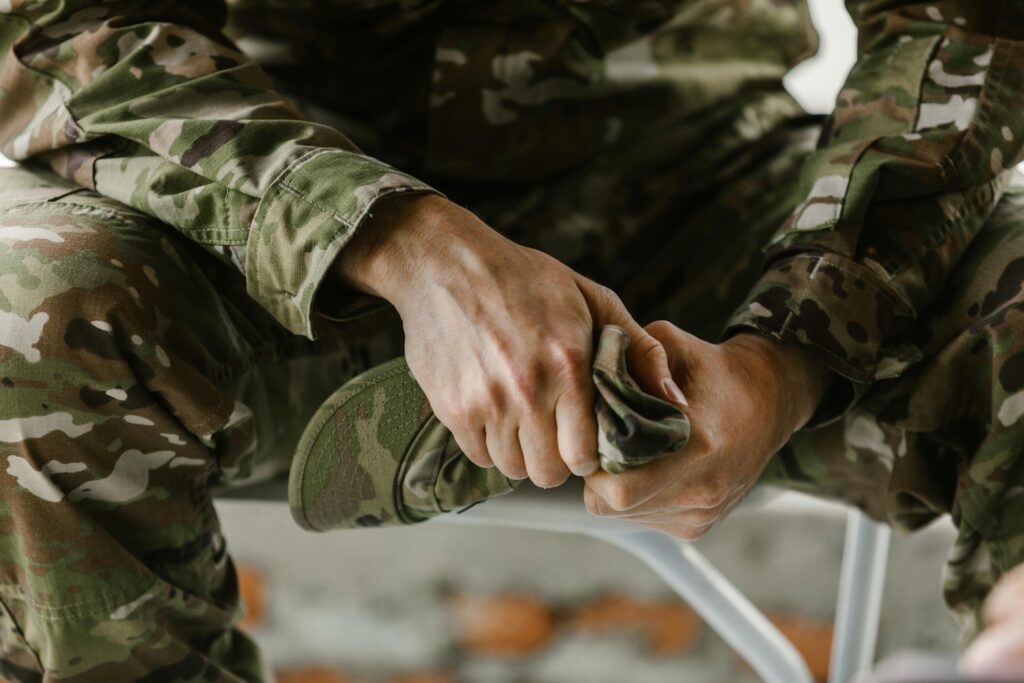
Some Muslims may not associate Islam with the U.S. military, but there are many Muslims who are in the armed forces. Every military base provides religious accommodations for service members of all faiths, including Islam. Every branch of the military has Muslim chaplains who support the spiritual needs of soldiers and their families. They even offer classes on Islam to active-duty soldiers and their families and host Jummah prayers.
Muslim chaplains play an essential yet often unseen role in the U.S. Armed Forces. Among them, Chaplain Col. Khallid M. Shabazz, 57, stands out as the highest-ranking Muslim chaplain in the Army. He currently serves as the Command Chaplain for the U.S. Army in the Pacific. With over three decades of military service, a doctorate in ministry, and a Ph.D. in education, he brings a unique blend of academic insight, pastoral care, and leadership experience to his work.
Shabazz also teaches adult learners, combining his background in philosophy and ethics with compassionate guidance that supports the spiritual, emotional, and ethical well-being of soldiers from all faiths. During Ramadan, when Muslim service members balance fasting, prayer, and reflection with the demands of the military, Shabazz’s role becomes even more vital in exemplifying how faith and soldiery can coexist harmoniously.
Muslim Representation in the Military
When asked about the importance of Muslim chaplains in uniform, Shabazz, who grew up Lutheran and converted to Islam 30 years ago, said every faith group deserves representation. “Just like others have pastors or rabbis, Muslims need someone who can lead Jummah, teach Quranic studies, and advise commanders on religious affairs,” he told Islamic Horizons.
He explained that Muslim chaplains not only serve Muslim soldiers’ spiritual needs, but also educate military leadership about Islamic practices like men growing out their beards or women wearing hijab. “Muslim chaplains had to step in to advise the commanders on religious accommodations,” he said. Without skilled Muslim advisors championing the needs of soldiers, the path to acceptance would have been much steeper.
Shabazz explained that even with the presence of Muslims in the military, misconceptions about Islam still exist within the ranks. His presence as a chaplain offers an opportunity to challenge those misconceptions through experience and dialogue. “By simply being there, serving alongside everyone else, you counter stereotypes with your character,” he said. “I have been in uniform for 35 years, and whenever I am in an organization where those myths exist, the military allows us to do professional leadership development. I can teach people what is right and what is wrong.”
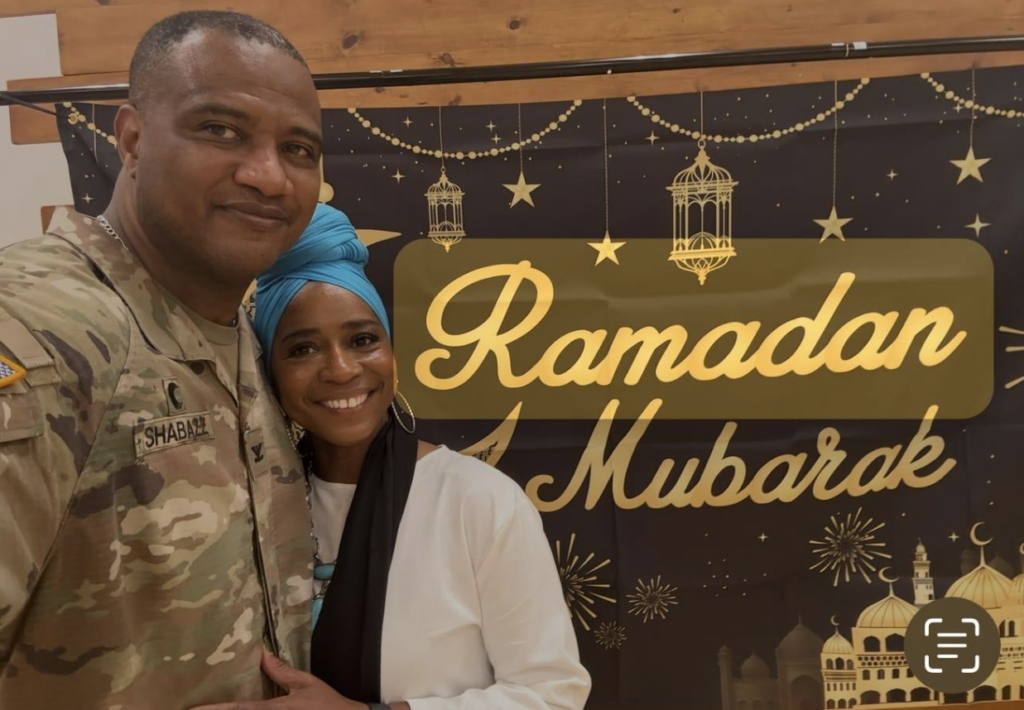
He described his role as a “ministry of presence,” exemplified by attentive service, sincerity, and compassion. Shabazz defined the ministry of presence as “being in the dirt and the mud with the soldiers, not watching from the sidelines.”
Shabazz also noted that his visibility has led to meaningful conversations. When people see a Muslim chaplain praying, fasting, or teaching, it humanizes the faith. They are no longer “the other” but transform into their colleague, counselor, and spiritual leader. Non-Muslim soldiers who may not have otherwise met Muslims can bond with chaplains like Shabazz through their shared military background.
A Man on a Mission
Regarding his day-to-day work, Shabazz described chaplaincy as deeply human-centered. “99% of what I do is counseling, whether marriage counseling, conflict analysis, suicide prevention, or family retreats,” he said. “Chaplains are the bridge between commanders and soldiers who are struggling. We help people navigate life.”
Becoming a chaplain, especially in the military, requires years of theological and professional training including at least 72 graduate credit hours and several years of religious study. “We come into the military a little older, a little wiser,” he said. “You need maturity because you’re dealing with people’s lives.”
Shabazz provides guidance to Muslim service members on balancing faith and duty. He explained that sometimes soldiers are new to Islam, or they are struggling to maintain their religious identity in a demanding environment. He helps them resolve those tensions by teaching them “how to stay disciplined, how to pray, and how to hold on to their deen while serving.”
Ramadan in the Military Ranks
Shabazz acknowledged that fasting while serving can be difficult for soldiers, especially when leadership does not fully understand the practice. “Before I became a chaplain, I tried to explain to my commander that I couldn’t eat or drink during the day. He responded, ‘Well, everyone skips meals sometimes!’” Shabazz recalled. “He didn’t get that Muslims fast from dawn to sunset, meaning no food, no water. It was foreign to him.” That initial misunderstanding motivated Shabazz to advocate for change.
“As a chaplain, I can now educate commanders through formal memos that outline what Muslim soldiers need during Ramadan,” he said. “We ask for adjustments like being excused from strenuous physical training during daylight hours or being assigned to light duty so they can preserve their strength.” Advocating these policy changes, Shabazz provides the support he lacked as a new Muslim.
Ramadan offers a powerful opportunity for education because commanders are invited to join Muslim soldiers for iftar, which can help them understand the significance of the fast, the meaning of hijab, and the importance of prayer accommodations. Ramadan also facilitates interfaith connection. “When they sit down with us, hear the adhan, and share that first sip of water after sunset, it changes their perspective,” Shabazz said.
The two Eid celebrations also serve as conduits for bringing people together. At Fort Hood, Texas, Shabazz helped organize one of the largest Eid celebrations in the Department of Defense (since then renamed as Department of War by the Trump administration), drawing more than 250 attendees, nearly half of whom were non-Muslims.
The Path to Purpose
Shabazz credits Islam with saving his life and reshaping his understanding of dignity, family, and progress. Like many others, his spiritual journey began with curiosity and admiration for strong Muslim leaders. “I was drawn to Islam through Malcolm X and Muhammad Ali,” he said. “Their discipline inspired me.” After embracing Islam, Shabazz even took on the last name Malcolm X had chosen for himself after performing Hajj: El-Shabazz.
Despite finding strength in his new faith, Shabazz’s path to chaplaincy was forged through personal struggle. “I was a young soldier, a specialist, and I had just converted to Islam, and suddenly I did not feel welcomed in my unit,” he recalled. The isolation led him to a state of depression until one day, a Christian chaplain approached him and offered some unexpected advice. “He said, ‘Why don’t you become a Muslim chaplain to help people like yourself?’”
Shabazz described it as a moment of “revelation” that set him on a renewed path of purpose. Now, as a chaplain, colonel, and scholar, it is Shabazz who inspires other young men. “Chaplaincy exists to help people in their darkest moments, and I was one of those people,” he said.
When asked how he maintains his spiritual focus while taking on such responsibility, Shabazz described his rigorous daily routine. “I wake up at 3 a.m. and go to the gym at 3:30,” he said. “That early discipline keeps me grounded. After my workout, I read the Quran and remember Allah.” Shabazz even records some of his early-morning workouts and posts them on social media to motivate soldiers and civilians alike.
Influence Beyond the Military
Shabazz shared that the impact of Muslim chaplaincy extends far beyond soldiers. “Our work touches families, civilians, and people around the world,” he said. “I’ve been blessed with a platform that reaches millions on social media and in person. I’ve spoken everywhere from Malaysia to Saudi Arabia.”
Shabazz has become an influential public figure with multiple interviews with NPR, The Wall Street Journal, The Washington Post, and The New York Times. He also has a strong social media presence, particularly on TikTok, through which he promotes mental and physical fortitude. His message reflects his military background and Muslim faith, emphasizing shared values such as duty, family, and compassion. “Those are Islamic principles, but they’re also universal,” he said.
A Message for Ramadan 2026
Shabazz offered a reminder from the Quran to consider as Ramadan approaches: “Allah will not change the condition of a people until they change what is within themselves” (13:11).
“Ramadan is our chance to realign ourselves with Allah,” he said. “It’s a time to renew discipline, patience, and gratitude. When we strengthen our relationship with our Creator, everything else follows – our sense of purpose, our resilience, our hope.”
For Muslim soldiers fasting in uniform, he added a note of encouragement. He compared their service to discipline and their fasting to devotion, noting that together they are evidence that faith and duty can coexist. “You can serve your country and your Creator at the same time,” he said.
For more on Chaplain Col. Shabazz, follow him on TikTok @doctorkhallid.
Wendy Díaz, is a Puerto Rican Muslim writer, poet, translator, and children’s book author. She is also the Spanish content coordinator for ICNA-WhyIslam and the co-founder of Hablamos Islam, a nonprofit organization that produces educational resources about Islam in the Spanish language.
Want more like this? Subscribe to the Islamic Horizons magazine and support authentic journalism by Muslims for Muslims.